
Property owners
Purple Wintercreeper
- Plant
- Purple Wintercreeper
- Botanical name
- Euonymus fortunei
- Group
- Ground cover
Purple Wintercreeper (Euonymus fortunei): light, water, soil, size and care for San Antonio area landscapes.
On this page
Its botanical name is Euonymus fortunei.
Light
It prefers full sun to medium shade. It tolerates full shade.[1]
Soil and drainage
It adapts to loam, clay-loam, sand and gravelly soil.
Height
The NC State Colorata cultivar profile lists 6-9 inches.
Spread
The NC State Colorata cultivar profile lists 1-3 feet at maturity. It also says rooting stems can spread indefinitely.
Foliage
It is evergreen in the Colorata cultivar profile.
Water
It tolerates drought. If watering ever feels like a guessing game, our horticulturists can care for your Purple Wintercreeper on a schedule that fits your yard.
Pruning
Trim it annually after flowering to maintain shape.
Seasonal behavior
It is an evergreen trailing cover that roots along stems and can climb trees. Another source warns it can escape into native forests. That source notes invasive behavior in its region.
Why are my wintercreeper leaves turning purple in autumn?
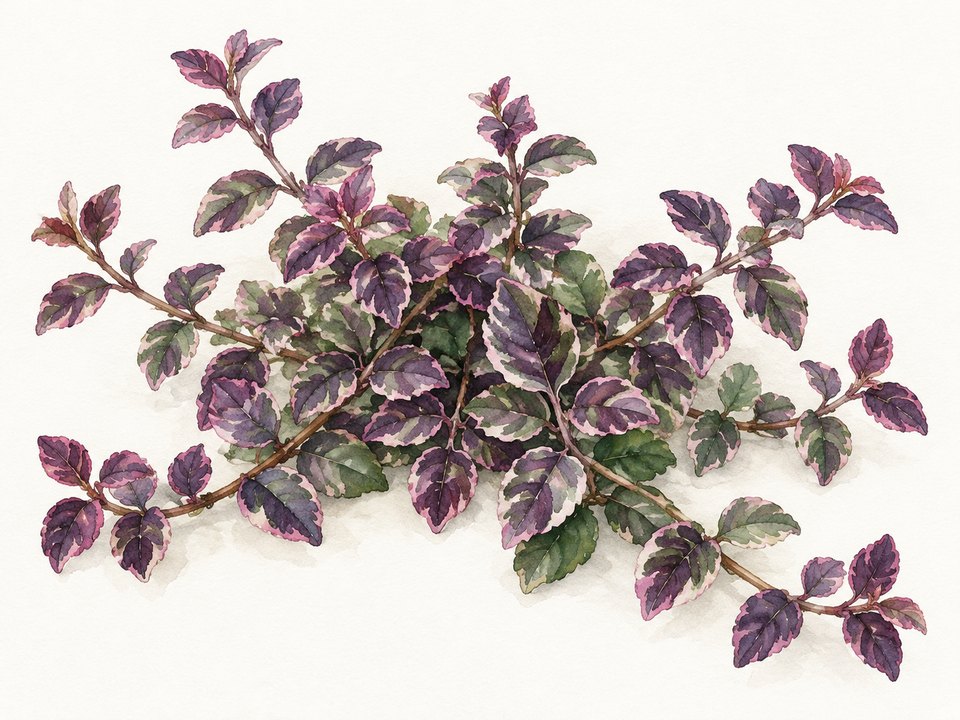
The NC State Colorata cultivar profile describes green leaves turning dark purple in fall and winter. That color change is expected for this form. It does not explain brown, brittle or dying foliage. The catalog does not name a cultivar. Verify the form before treating every color change as normal.
Should I let wintercreeper climb nearby trees?
The NC State Colorata profile says this plant roots along stems, climbs vertical supports and readily escapes into native forests. Do not treat it as a harmless mat simply because it was planted as groundcover. Keep its spread under review. A climbing/escape warning is separate from community permission.
When to Plant Purple Wintercreeper
Plant Purple Wintercreeper in fall or early spring in Central Texas. A fall planting establishes roots through the cool season. The plant is ready to grow and bloom the following year. Spring planting works too if you water through the first summer.[2]
If you would like a hand, the Texas Allied Landscape team can plant your Purple Wintercreeper and keep it thriving.
Planting
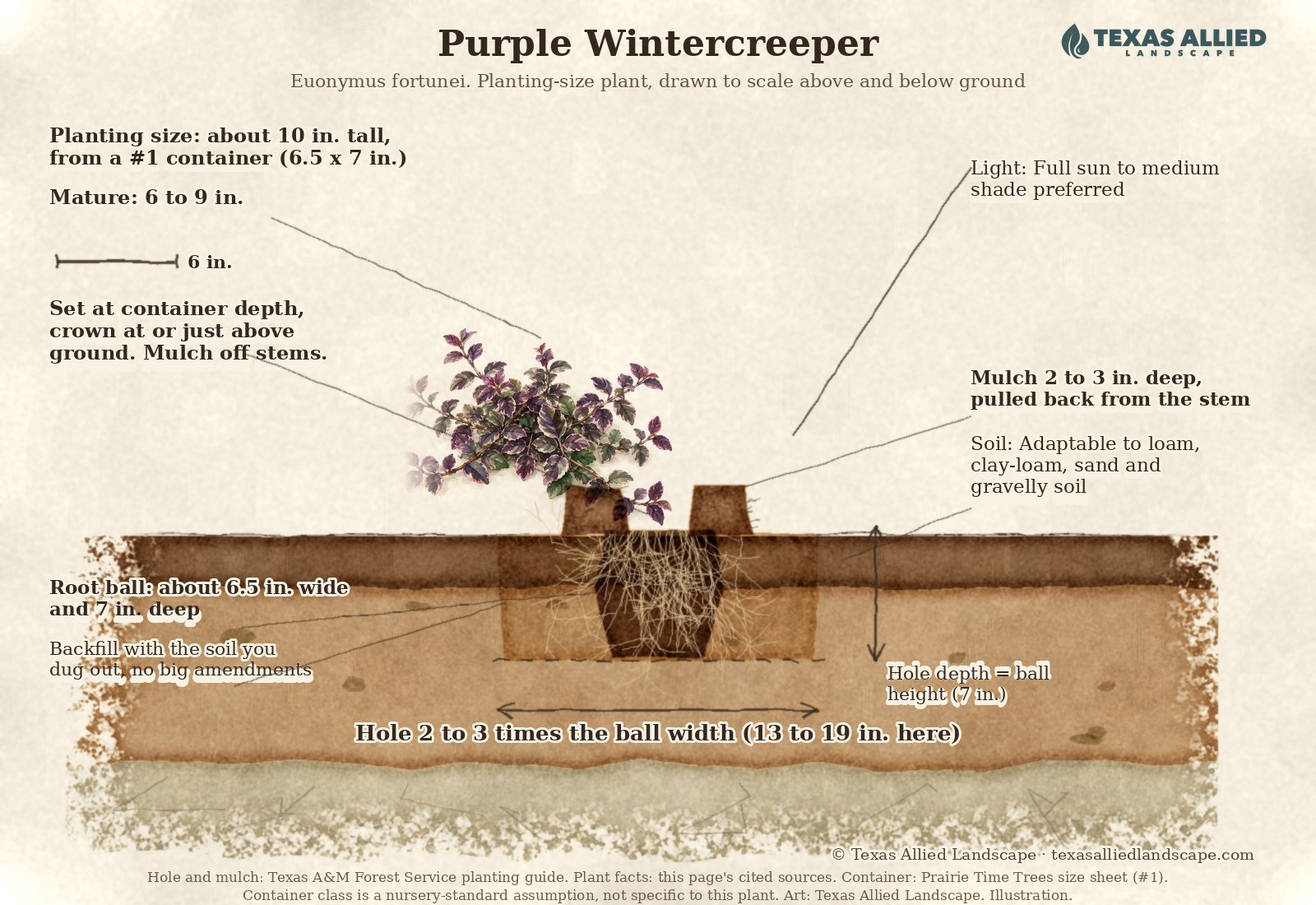
- Dig a hole twice as wide as the pot and no deeper, with sloping sides. Set the plant at the same depth it grew in its pot. Loosen any circling roots before backfilling.[3]
- For a new bed, clear grass and weeds first, roots and all.[3]
- For the site, it prefers full sun to medium shade. It tolerates full shade.[1]
- For timing, a fall planting establishes roots through the cool season. The plant is ready to grow and bloom the following year. Spring planting works too if you water through the first summer.[2]
- Soak it well at planting and keep watering while the roots establish.[3] Once established, a fall planting has roots set through the cool season. The plant is ready to grow and bloom the following year. Spring planting works too if you water through the first summer.[2]
- Mulch 2 to 4 inches, kept a few inches away from the stems to prevent crown rot. It needs no staking or other support.[3]
Care Instructions for Your Purple Wintercreeper
How to Water a Purple Wintercreeper
It tolerates drought.
Sunlight
It prefers full sun to medium shade. It tolerates full shade.[1]
Soil and drainage
It adapts to loam, clay-loam, sand and gravelly soil.
Mature height and spread
The NC State Colorata cultivar profile lists 6-9 inches tall. The same profile lists 1-3 feet wide at maturity. It also says rooting stems can spread indefinitely.
Pruning
Trim it annually after flowering to maintain shape.
Normal seasonal behavior
It is an evergreen trailing cover that roots along stems and can climb trees. Another source warns it can escape into native forests. That source notes invasive behavior in its region.
Purple wintercreeper questions
Is purple wintercreeper invasive?
Euonymus fortunei is listed as invasive in parts of the US. There it climbs and seeds into woodlands. As a contained groundcover in a Texas bed it mostly stays put. Still, do not let it climb trees.[4]
Next step: Our horticulturalists can keep it clipped off trees and fences, or replace it with a native groundcover.
Why is it called purple wintercreeper?
The green leaves of 'Coloratus' turn plum-purple in cold weather. It is the one groundcover that gets prettier in winter.[5]
Sun or shade for wintercreeper?
Either. It is one of the few groundcovers that grows in deep shade and full sun alike.[6]
What are the white patches on my euonymus?
It is likely euonymus scale, this plant's main pest. Bad infestations yellow and thin the foliage.[7]
Let Texas Allied Landscape care for your Purple Wintercreeper
Purple Wintercreeper does best with steady, knowledgeable care. That means the right water, pruning at the right time, and a trained eye for stress. The horticulturists at Texas Allied Landscape care for plants like yours across the San Antonio area. They bring over 40 years of landscape experience.
In these community guides

Illustration. Illustration based on reference photos of Crown Ridge Manor. Not a single literal view. Crown Ridge Manor Landscaping
Plan your Crown Ridge Manor yard, prepare the approval package and build to the written design. We check local and…

Illustration. Illustration based on reference photos of Sonterra. Not a single literal view. Sonterra Landscaping
Bring your Sonterra address and ideas. Texas Allied can design the yard, prepare the review package, build the approved…
Sources
- Euonymus fortunei 'Colorata', North Carolina Extension Gardener Plant Toolbox.https://plants.ces.ncsu.edu/plants/euonymus-fortunei-colorata/abc
- October Gardening Checklist, Travis County AgriLife Extension.https://travis-tx.tamu.edu/about-2/horticulture/monthly-gardening-calendar-for-austin-area/october-gardening-checklist-for-austin-and-central-texas/abc
- Back to basics: Planting perennials, SAWS Garden Style San Antonio.https://www.gardenstylesanantonio.com/garden-articles/back-to-basics-planting-perennials/abcd
- NC State Extension, "Euonymus fortunei."https://plants.ces.ncsu.edu/plants/euonymus-fortunei/↑
- NC State Extension, "Euonymus fortunei 'Coloratus'."https://plants.ces.ncsu.edu/plants/euonymus-fortunei-colorata/↑
- Morton Arboretum, "Wintercreeper."https://mortonarb.org/plant-and-protect/trees-and-plants/wintercreeper/↑
- Ohio State Plant Facts, "Euonymus fortunei."https://plantfacts.osu.edu/tmi/Plantlist/eu_tunei.html↑