
Property owners
Crown Ridge Manor Landscaping
Build a yard that fits your home and the way you spend time outside. Texas Allied Landscape helps plan planting, lawn and irrigation at Crown Ridge Manor, with the right review package before work begins.
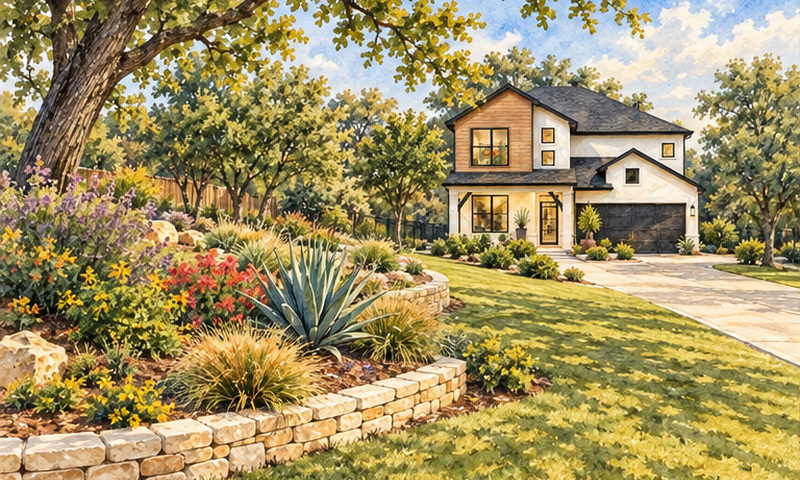
Get a quoteIllustration based on reference photos of Crown Ridge Manor. Not a single literal view.
On this page
Make room for a yard you enjoy at Crown Ridge Manor. Shape planting, lawn and outdoor spaces that fit your home. Texas Allied Landscape helps you choose plants, plan water use and prepare the approval package. We check your lot and both sets of landscape rules. Then we build to the approved design. Start with the rules that shape your yard below.
Plan, submit, review, then install
Prepare a site and planting plan.
Show the work area and existing improvements. Add plant names, sizes and locations. Include borders, hardscape and irrigation. For local xeriscape review, include a photo or accurate drawing. Add the percentage of each yard covered by gravel, rocks and cacti. Site plans need approval before lot clearing. The ACC can ask for more information. It must also approve the proposed builder for an improvement.[1][2]
Submit before work starts.
Use TownSq on a desktop or laptop. Pay the $35 review fee when you apply. It is not refunded if your request is denied. Exterior changes at the front, sides and back need approval. If TownSq is unavailable, ask ACCReview@GoodwinTX.com about other ways to submit. The $35 covers the verified local fee. Any added master or special-review charge still needs a check.[3]
Wait for written approval.
Allow up to 60 full days for local review. Under the local rules, no answer means rejection. Master xeriscape review uses 30 days from a complete package. Approval follows if that period passes without an answer. Get local written approval before starting. Confirm which process governs the lot and project before relying on a deadline.[1][2][3]
Install the approved design on time.
Local xeriscape work must start within 30 days of approval. It must proceed diligently to completion. The general local improvement rule requires a start within 120 days. Completion is due within one year of approval. The ACC can set another completion period. For xeriscape, use the shorter 30-day start deadline. Get approval for changes. Do not build a different plan.[1]
Xeriscape has two sets of conditions
You can use drought-tolerant landscaping with written ACC approval. Gravel, rocks and cacti combined may not exceed 10% of the front yard. The same 10% limit applies to the back yard. The only exception is ACC approval in advance and in writing. Calculate that limit for each yard on its own. The design must fit the community. It must not damage neighboring landscaping or attract harmful diseases and insects.[1]
For the master xeriscape calculation, add the front and side yard areas. Subtract the original driveway, original concrete flatwork and foundation plant beds. This is the "Total Landscape" area used for these limits:[2]
- At least 30% living, organic vegetation, including natural turf or natural ground cover. The review authority may adjust this percentage for lot conditions.
- Up to 70% artificial turf, with approval and the policy's installation and product requirements.
- Up to 30% natural mulch beds. These must contain evergreen plants. Living vegetation must cover at least 30% of a mulch bed within two years.
- Up to 20% new concrete flatwork. The review authority may adjust this for lot conditions.[2]
Keep the full design within 100% of the counted area. Rock beds have no separate numeric cap in the master sections reviewed. Manor's own 10% gravel, rock and cacti limits still apply unless you get the written exception. We confirm both sets of rules before choosing materials.[1][2]
Placement, borders and screening
Keep plants with mature thorns, spines or sharp edges away from walks. The distance is at least 6 feet from a public sidewalk or walkway. Keep plants and improvements clear of sightlines for people walking or driving. This rule controls placement. It does not ban a named species throughout the lot.[2]
Xeriscape areas, including artificial turf, need approved borders. Submit the border material, installation method and a sample. Possible materials include stone, clay brick pavers, decorative concrete and metal edging. Dangerous edging is not allowed beside or close to public walks. Required vegetation screens must fully screen their object within 24 months. They must be kept effective.[2]
Check hedge height when laying out your yard. A hedge on a side lot line has two limits. Forward of the point 3 feet behind the home's front exterior corner, it cannot exceed 2 feet. From that point toward the rear, the limit is 6 feet. Any other height needs advance written approval. These limits apply to hedges along the side lot line.[1]
Artificial turf needs a full specification
Get approval before using artificial turf, even within the 70% cap. Use a professional installer. Submit contractor contact details and liability insurance. Include product information and a sample. References and project photos may be requested. Check the product against the requirements before ordering. That covers the sub-base, drainage and permanent border beside neighboring natural grass. It also covers the warranty, fibers, color blend, turf weight and infill.[2]
Trees, drainage and lot-specific easements
Get written ACC approval before removing a tree, regardless of its diameter. Remove soil only as needed for approved landscaping or construction. Keep drainage paths open so water can flow properly between lots.[1]
On a drainage-easement lot, changing the easement's cross-section takes extra consent. Landscaping or other work that changes it needs consent. Under the local rules, the City of San Antonio Director of Public Works gives that consent. Get this public consent as well as HOA approval.[1]
Landscape, fence and sidewalk easements cover defined parts of Lots 36 and 2, Block 40. Two April 2025 instruments create them. The association is responsible for the easement improvements there. Their boundaries and maintenance duties apply to those defined areas. Get permission before changing association landscaping. Check the attached survey and your lot boundaries before work.[4][5]
Named grasses and ground covers
Named choices include Bermuda, St. Augustine, buffalo and zoysia grasses. Ground covers include Silver Ponysfoot, Creeping Jenny, Asian Jasmine and Purple Wintercreeper. Other drought-resistant grasses and ground covers may be considered. Submit your choices for approval with the whole design.[2]
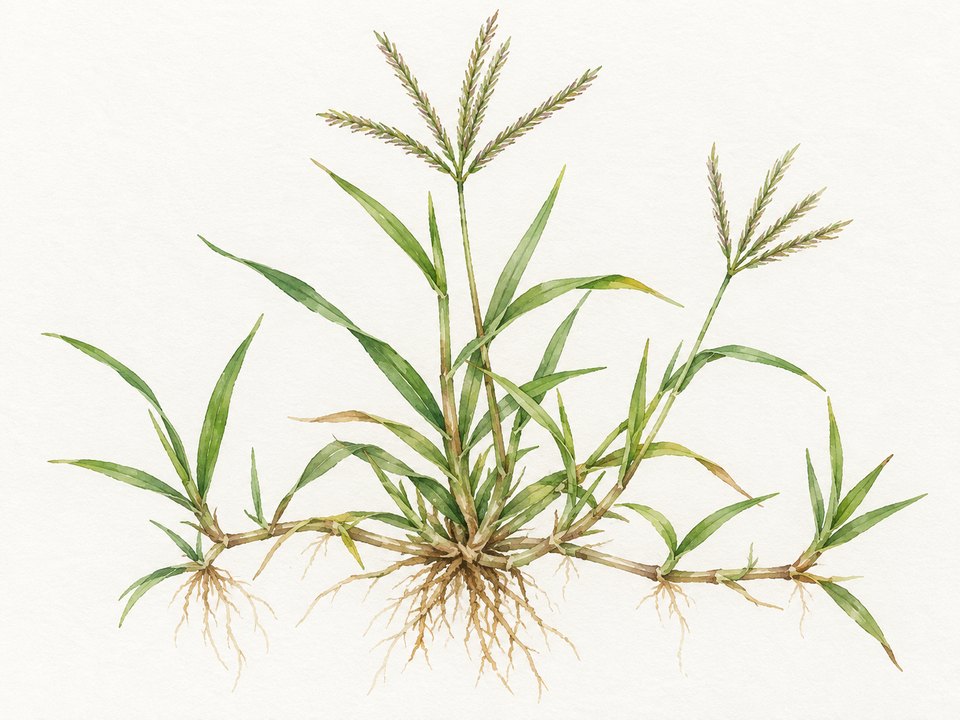
The cards illustrate the named plant groups. The listed "Silver Ponysfoot" is shown as Silver Ponyfoot in the card. No cultivar is specified. Review still covers the plant list, placement and whole design.
 Illustration
Bermuda grassCynodon dactylonIllustration 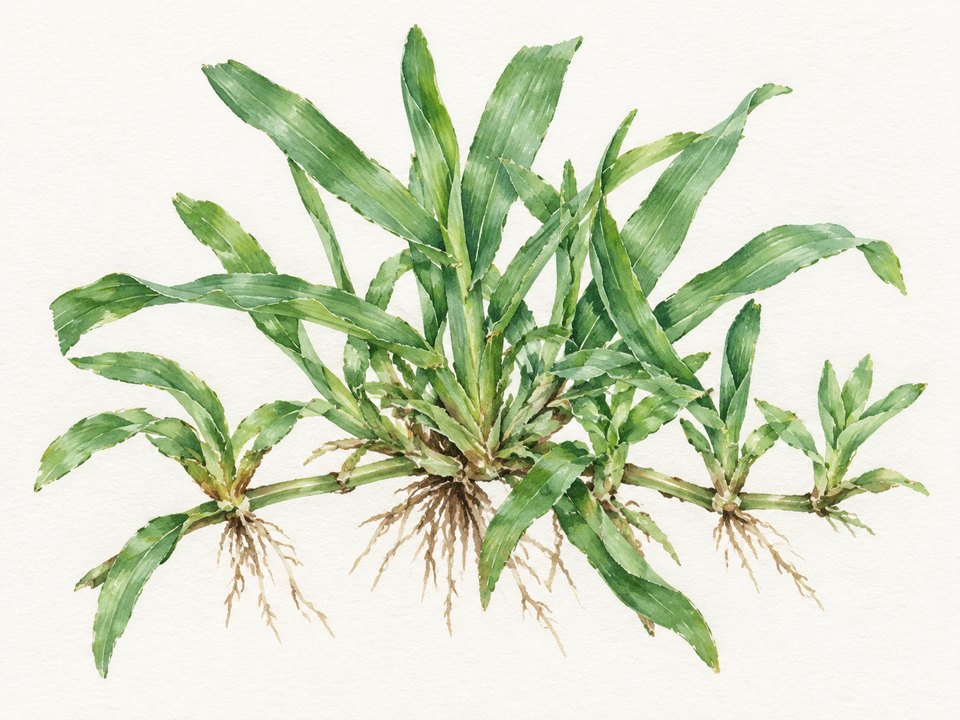 Illustration
St. Augustine grassStenotaphrum secundatumIllustration 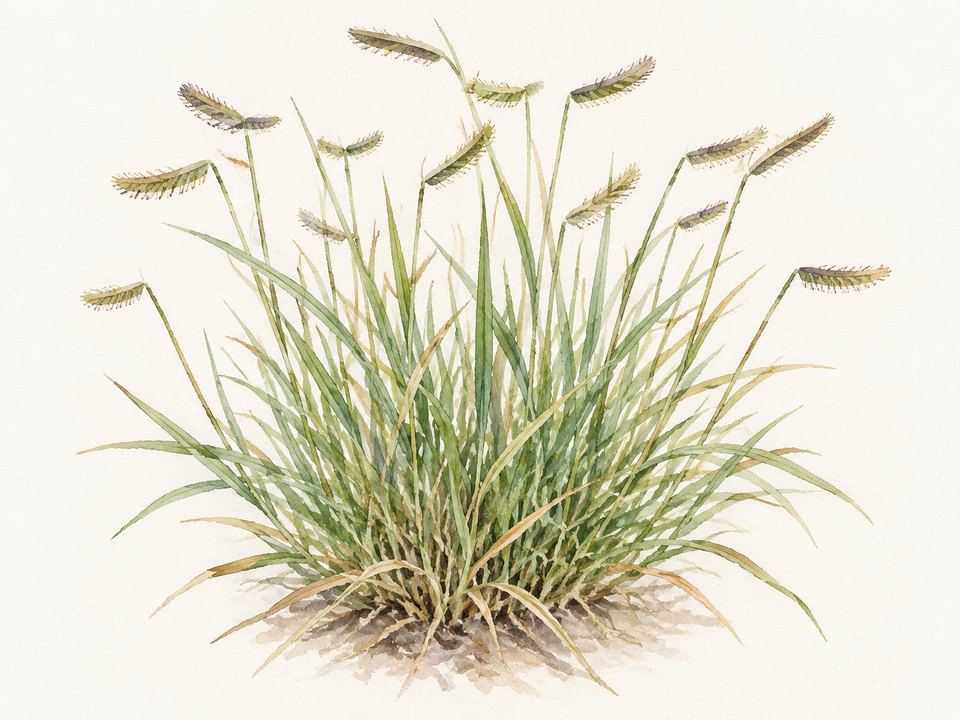 Illustration
Buffalo grassBouteloua dactyloidesIllustration 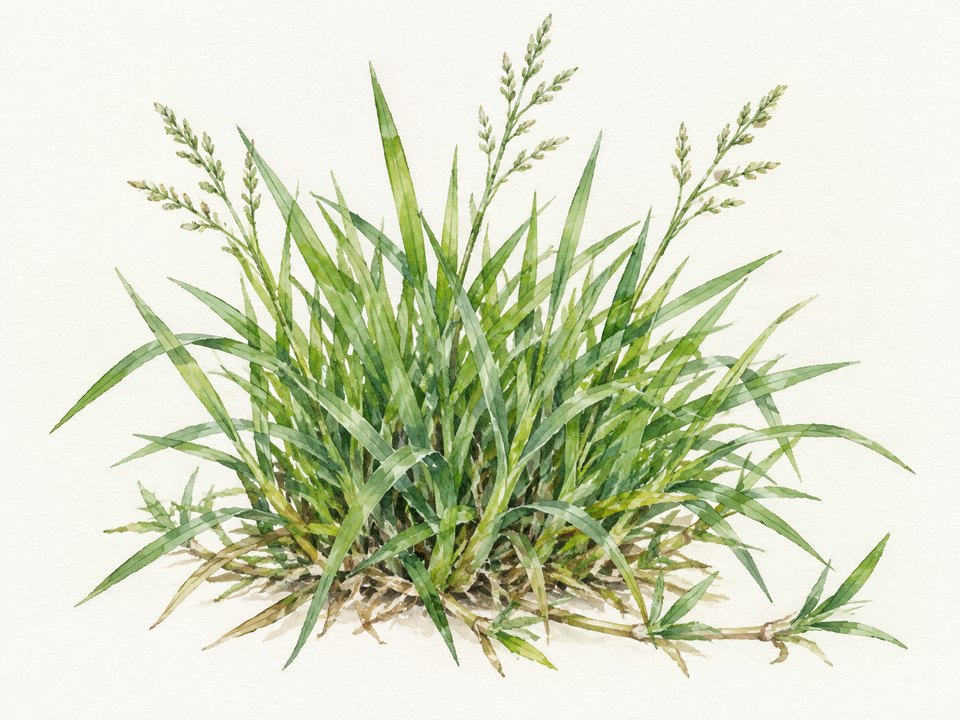 Illustration
Zoysia grassZoysiaIllustration  Illustration
Silver PonyfootDichondra argenteaIllustration 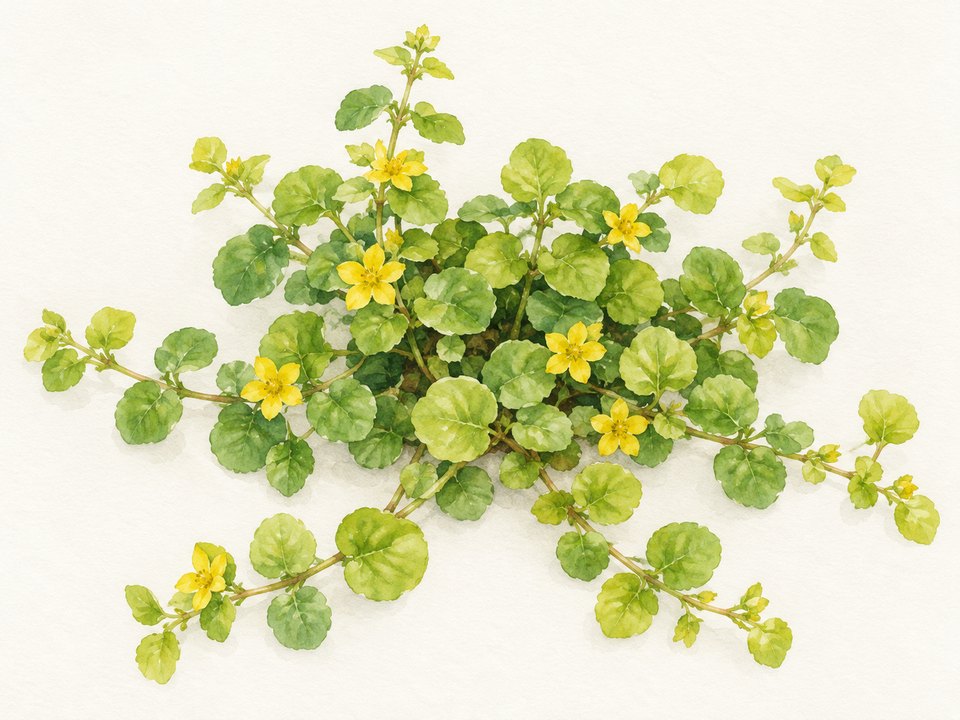 Illustration
Creeping JennyLysimachia nummulariaIllustration 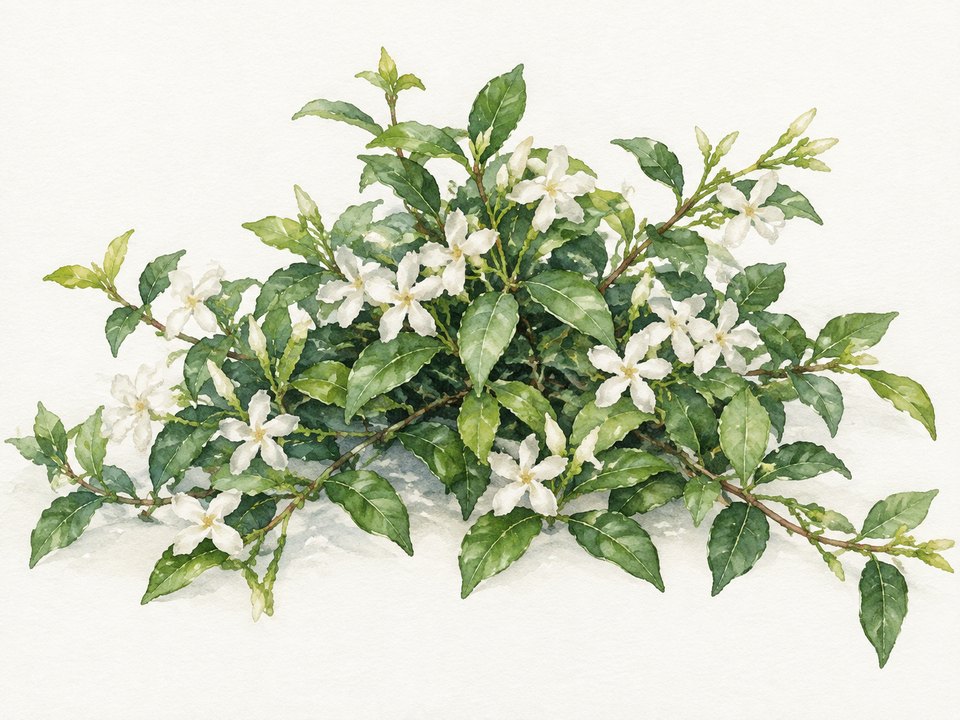 Illustration
Asian JasmineTrachelospermum asiaticumIllustration 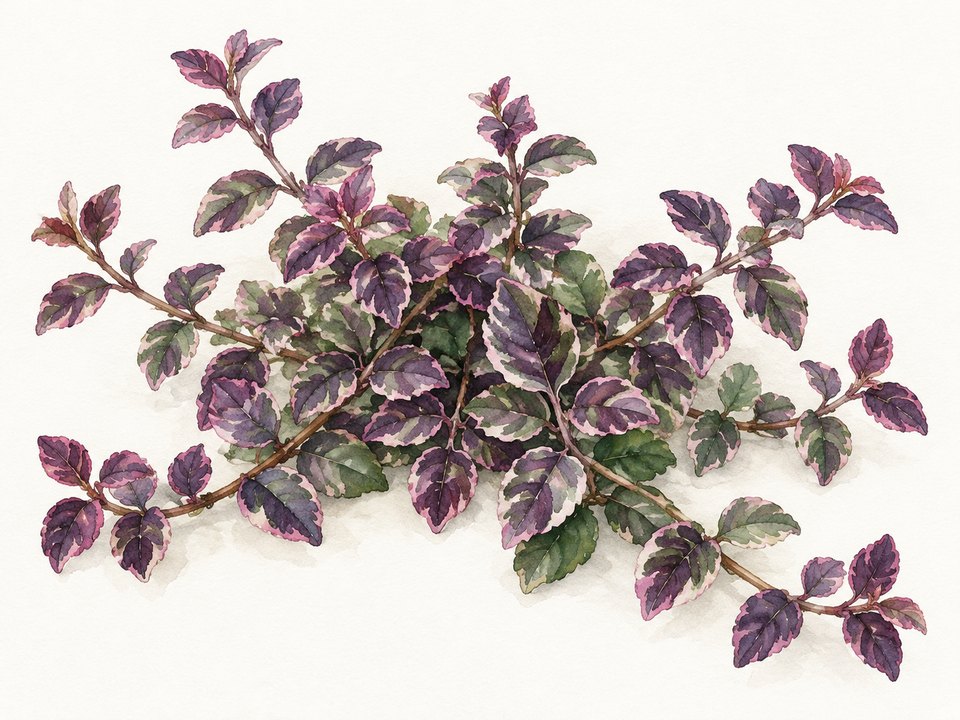 Illustration
Purple WintercreeperEuonymus fortuneiIllustration
List every plant, tree, turf and cactus in your plan. Show species, size, quality, spacing and location. Add planting details. Foundation plants need a container size of at least 5 gallons. Deer-resistant plants are recommended. Each choice still needs to fit the approved plan.[2]
Watering and rainwater systems
Owners must mow, prune and water. They must keep lawn and garden areas alive, attractive and free of weeds. Planting beds must stay free of turf grass. Owners also maintain the landscaped strip between their lot boundary and an adjacent curb. That changes only if the association performs that work.[1]
Get written approval for a rainwater harvesting system. Keep it out of the area between the front of your home and a neighboring street. Follow the added screening, overflow, maintenance and safety rules. The 200-gallon limit applies only to a minimally visible tank. It comes from the master policy's specific guttering exception. Other hidden systems need their own check. We confirm both sets of rules before installation.[1][2]
Follow current public watering restrictions. A watering schedule or drought-stage exception has not been verified for this guide. Check those rules before setting irrigation timers.
Review fees
The local application fee is $35. It is nonrefundable, even if the request is denied. Any added master or special-review fee still needs a check before you budget the project.[3]
Maintenance deadlines and enforcement
Install front and side landscaping within 90 days after improvements are complete. That work needs prior ACC approval. Keep this completion deadline separate from the local deadline to start approved xeriscape work.[6]
For a new violation, the listed fine is $25. If the violation can be fixed, timely correction can avoid that fine. Listed repeat amounts are $50, $75, $100 and $125. The amount for an ongoing violation is left to be set. The board can adjust fines case by case. We have not verified how often these fines are charged.[7]
You have notice, correction and hearing procedures. The reviewed hearing clauses differ. One starts the 30-day request period at mailing. The other starts it at receipt. Check your notice and current requirements before relying on the later date. A lien cannot be foreclosed for debt made up solely of fines under the reviewed manual. Separate master rules allow maintenance entry and cost recovery. Those follow their notice-and-correction process.[7][8]
Compliance visits are described as typically every two weeks. Actual visit frequency and enforcement rates have not been measured for this guide.[9]
What still needs a lot-specific check
Before applying, confirm how the local and master rules work together for your lot. They use different review clocks, silence rules and landscape-area calculations. The master rules also give a project's own architectural committee control over that project's covenants. That applies after the required project approval. We have not recovered a current written answer on this point. It is how Manor applies the 2026 master landscape policy alongside its own declaration. Design freedom, total review layers and combined review cost stay unscored. Local approval scope and plan requirements are supported by the rules reviewed.[1][8][2]
The July 2025 local amendment changes the playscape and sport-court clause. It leaves the landscape palette unchanged. The October 2026 deed transfers listed common-area lots without adding a plant list. This guide uses Manor's rules. It does not use the rules of other neighborhoods such as the Heights of Crownridge.[10][11]
Plan your Crown Ridge Manor yard
Texas Allied Landscape can map your lot and plan planting and irrigation. We prepare the review package and build to the written approval. We check the rule chain and open questions before installation. Get the ACC's approval before starting work.
Crown Ridge Manor landscape questions
Can I start xeriscape while I wait for approval?
How much rock can I use?
Do I need permission to remove a small tree?
Yes. Get advance written ACC approval for tree removal. The local requirement applies without a stated minimum diameter.[1]
Sources and review date
Reviewed November 10, 2026. The local and master document chains include 316 pages read in full. The earlier six-page master management certificate is also included. County searches were checked against records certified through November 5, 2026. This is a guide to the reviewed sources. It is not legal advice or a complete title review for every lot.
Your community profile
Community profile
Crown Ridge Manor
1 permissive5 protective
| Design latitude | — |
|---|---|
| Approval scope | 5/5 |
| Approval layers | — |
| Approval cost | — |
| Plan preparation | 3/5 |
| Enforcement capability | — |
Higher means more documented control or burden, not a better community.
Design latitude
—
- 1
- 2
- 3
- 4
- 5
How much of the plant and design palette is prescribed. A higher score means less design freedom.
Why this score
Local and master rules use different landscape calculations. Their combined use at Manor still needs a written answer, so design freedom is unscored.
Approval scope
5/5
- 1
- 2
- 3
- 4
- 5 (this score)
How much exterior work needs written sign-off.
Why this score
Get written ACC approval before improvements, landscaping, clearing and tree removal. The local process covers front, side and back exterior changes.
Approval layers
—
- 1
- 2
- 3
- 4
- 5
Counts distinct required community reviewers only. City, county and state permits, optional steps and repeat submissions are not counted.
Why this score
The project committee controls its project covenants after the required project approval. How the 2026 master policy adds to Manor review still needs a written answer. Total review layers remain unscored.
Approval cost
—
- 1
- 2
- 3
- 4
- 5
What the community's own approval process costs to apply.
Why this score
The local review fee is $35 and is nonrefundable. An added master submittal fee has no verified amount. The combined cost remains unscored.
Plan preparation
3/5
- 1
- 2
- 3 (this score)
- 4
- 5
How much drawing and documentation an application needs.
Why this score
Prepare a site plan, plants, borders, hardscape, photo or drawing and yard percentages. Include scaled plans and detailed planting information. Artificial turf needs a professional installer; that rule does not require every landscape plan to have a professional designer.
Enforcement capability
—
- 1
- 2
- 3
- 4
- 5
Which remedies the verified governing documents and adopted policies provide. The score reflects verified documented provisions, not observed enforcement practice or legal conclusions. Not finding an express clause is not a conclusion that no authority exists.
This guide covers Crownridge Manor Community, Inc. and Lots 2-36 in the Crown Ridge Manor PUD plat. Other neighborhoods with Crownridge in their names have different rules. Your lot is also part of a master-association rule chain. The June 2026 master landscape policy adds rules with a different review clock. We check both sets before planning your work.[1][8][2][12][13]
Sources
- Crownridge Manor Declaration, Doc. 20230174177, all 81 PDF pages read. Key passages: pp. 9-10, 17-18, 26-28, 31-33, 51-54, 62 and 80. Official document index .https://scrmc.sites.townsq.io/4abcdefghijklmno
- Crownridge of Texas Resolution Adopting Policies, Doc. 20260120780, all 54 pages read; rainwater pp. 43-45 and xeriscape pp. 49-53. County source .https://bexar.tx.publicsearch.us/doc/320995409abcdefghijklmno
- Crown Ridge Manor, current public Architectural Changes instructions , checked November 10, 2026.https://scrmc.sites.townsq.io/1abcd
- Landscape, Fence and Sidewalk Easement, Lot 36, Doc. 20250073000, all nine pages read. County source .https://bexar.tx.publicsearch.us/doc/244650169↑
- Landscape, Fence and Sidewalk Easement, Lot 2, Doc. 20250073001, all nine pages read. County source .https://bexar.tx.publicsearch.us/doc/244650170↑
- Master maintenance and master-plan criteria, Doc. 20130065406, all seven pages read; maintenance resolution p. 3. The separate 30-day master-plan decision is not a general landscape deadline. County source .https://bexar.tx.publicsearch.us/doc/12583206↑
- Crownridge Manor Community Manual, Doc. 20230174333, all 49 pages read; fine and hearing policy pp. 24-28. Official document index .https://scrmc.sites.townsq.io/4ab
- Crownridge of Texas master Declaration, Doc. 795574, all 29 pages read; Articles VII and IX, including §9.8. County source .https://bexar.tx.publicsearch.us/doc/3511262abc
- Crown Ridge Manor public Compliance instructions , checked November 10, 2026.https://scrmc.sites.townsq.io/3↑
- First Amendment to Manor Declaration, Doc. 20250127797, all four pages read. County source .https://bexar.tx.publicsearch.us/doc/265476972↑
- Common-area Special Warranty Deed, Doc. 20260197759, all six pages read. County source .https://bexar.tx.publicsearch.us/doc/331400646↑
- Later source-chain checks: Manor restated management certificate, Doc. 20250128498, all four pages read, county source . A certificate locates the rule texts but does not substitute for reading them.https://bexar.tx.publicsearch.us/doc/265521920↑
- Master management certificate, Doc. 20260134225, all six pages read. County source . Earlier master amendments and policies were read separately.https://bexar.tx.publicsearch.us/doc/321420771↑