
Property owners
Sotol
- Plant
- Sotol
- Group
- Medium shrubs and perennials
Sourced light, water, size and seasonal details for Sotol.
On this page
Light, soil and water
Full sun to part shade with low water needs. Austin Grow Green lists sun to part shade and low water; the Wildflower Center lists full sun and dry, sandy, caliche or limestone-based soils. Good drainage is required.[1][2]
Size
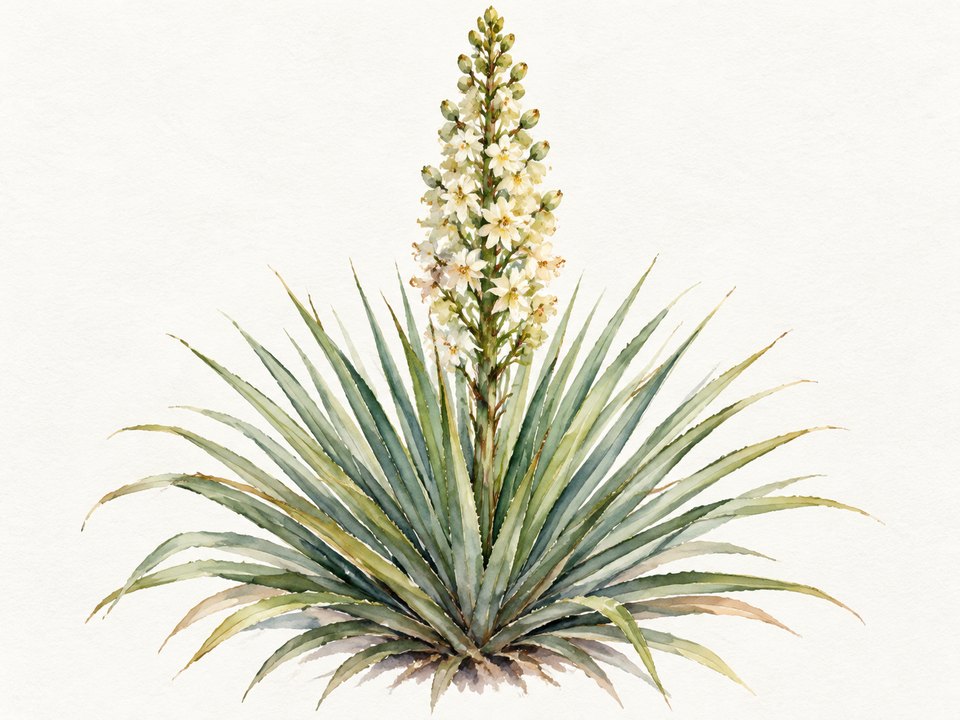
An evergreen cluster of dark, bluish-green leaves about 1.5 to 2.5 feet tall; Austin Grow Green lists 3 to 4 feet tall and 3 to 4 feet wide. The leaf edges carry sharp spines, so give the plant space away from walkways.[2][1]
Flowers
A flower stalk 9 to 15 feet tall, topped with a spike of yellowish flowers, appears in June and July. Remove old bloom stalks at the base.[2][1]
Maintenance
Low maintenance and highly deer resistant. It can attract hummingbirds and works as a barrier plant.[2][1]
When to Plant Sotol
Plant Sotol in spring through early fall, while the soil is warm. Drainage matters most going into winter: roots sitting in cold, wet soil rot, so a plant established long before winter handles the season better.
Avoid planting right before winter.
If you would like a hand, the Texas Allied Landscape team can plant your Sotol and keep it thriving.
Planting
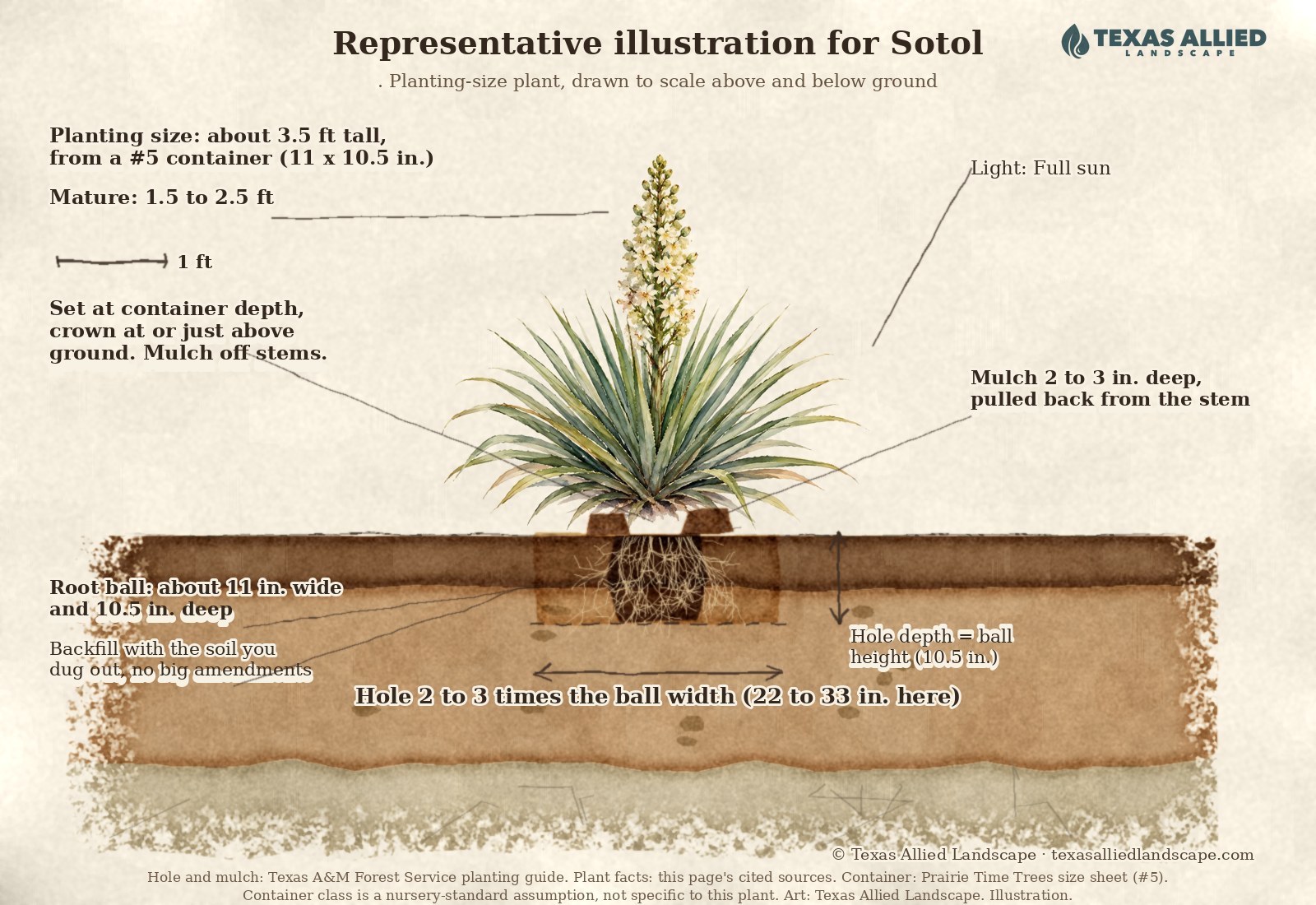
- Dig a hole twice as wide as the pot and no deeper, with sloping sides, and set the plant at the same depth it grew in its pot. Loosen any circling roots before backfilling.[3]
- For a new bed, clear grass and weeds first, roots and all.[3]
- Give it room: An evergreen cluster of dark, bluish-green leaves about 1.5 to 2.5 feet tall; Austin Grow Green lists 3 to 4 feet tall and 3 to 4 feet wide. The leaf edges carry sharp spines, so give the plant space away from walkways.[2][1] Space plants for that full size, not the pot size.[3]
- Soil: Austin Grow Green lists sun to part shade and low water; the Wildflower Center lists full sun and dry, sandy, caliche or limestone-based soils. Good drainage is required.[1][2]
- Timing: Plant Sotol in spring through early fall, while the soil is warm.
- Soak it well at planting and keep watering while the roots establish.[3]
- Mulch 2 to 4 inches, kept a few inches away from the stems to prevent crown rot. It needs no staking or other support.[3]
Care Instructions for Your Sotol
Sunlight, soil and water
Full sun to part shade with low water needs. Austin Grow Green lists sun to part shade and low water; the Wildflower Center lists full sun and dry, sandy, caliche or limestone-based soils. Good drainage is required.[1][2]
Mature height and spread
An evergreen cluster of dark, bluish-green leaves about 1.5 to 2.5 feet tall; Austin Grow Green lists 3 to 4 feet tall and 3 to 4 feet wide. The leaf edges carry sharp spines, so give the plant space away from walkways.[2][1]
Maintenance
Low maintenance and highly deer resistant. It can attract hummingbirds and works as a barrier plant.[2][1]
Flowers
A flower stalk 9 to 15 feet tall, topped with a spike of yellowish flowers, appears in June and July. Remove old bloom stalks at the base.[2][1]
Sotol questions
Should I remove the tall flower stalk?
Once the stalk finishes blooming and dries out, cut it off at the base. Unlike agaves, sotol does not die after flowering - the same rosette blooms again in later years.[4]
How much water does sotol need?
Almost none. It is a Chihuahuan desert native that thrives on rainfall alone in most of Central Texas, as long as the soil drains fast. Overwatering and heavy clay are what kill it.[5]
Is sotol a century plant?
No. Sotol (Dasylirion) is often confused with agaves, but it is a different plant: it flowers from a tall spike without dying, and its slender leaves have small hooked teeth along the edges.[6]
Should I trim off the dead leaves underneath?
Only for looks. The dried leaves form a natural skirt that protects the trunk; removing them gives a cleaner, sculpted shape. Wear gloves - the leaf edges have small teeth that grab skin.[7]
Next step: Our horticulturalists can de-skirt and shape mature sotols safely during a regular maintenance visit.
Let Texas Allied Landscape care for your Sotol
Sotol does best with steady, knowledgeable care: the right water, pruning at the right time, and a trained eye for stress. The horticulturists at Texas Allied Landscape care for plants like yours across the San Antonio area, backed by over 40 years of landscape experience.
In these community guides
Illustration. Illustration based on reference photos of Arbors of Fair Oaks. Not a single literal view. Arbors of Fair Oaks Landscaping
Bring your address, unit and yard ideas. Texas Allied Landscape helps design the planting and irrigation, prepare the…
Illustration. Illustration based on reference photos of Vicinia. Not a single literal view. Vicinia Landscaping
Bring your address, survey and ideas. Texas Allied Landscape helps check the rules, design the space and prepare for…
Sources
- Sotol, Texas, City of Austin Grow Green plant guide.https://www.austintexas.gov/department/grow-green/plant-guide/sotol-texasabcdefghijk
- Dasylirion texanum, Lady Bird Johnson Wildflower Center.https://www.wildflower.org/plants/result.php?id_plant=DATE3abcdefghijk
- Back to basics: Planting perennials, SAWS Garden Style San Antonio.https://www.gardenstylesanantonio.com/garden-articles/back-to-basics-planting-perennials/abcde
- University of Nevada Reno Extension, "Pruning Cacti And Other Desert Succulents."https://extension.unr.edu/publication.aspx?PubID=2760↑
- City of Austin Grow Green plant guide, "Sotol, Texas."https://www.austintexas.gov/department/grow-green/plant-guide/sotol-texas↑
- Lady Bird Johnson Wildflower Center, Ask Mr. Smarty Plants on Dasylirion.https://www.wildflower.org/expert/show.php?frontpage=true&id=12512↑
- City of Austin Grow Green plant guide, "Sotol, Texas."https://www.austintexas.gov/department/grow-green/plant-guide/sotol-texas↑