
Property owners
Trailing Juniper
- Plant
- Trailing Juniper
- Botanical name
- Juniperus horizontalis
- Group
- Ground cover
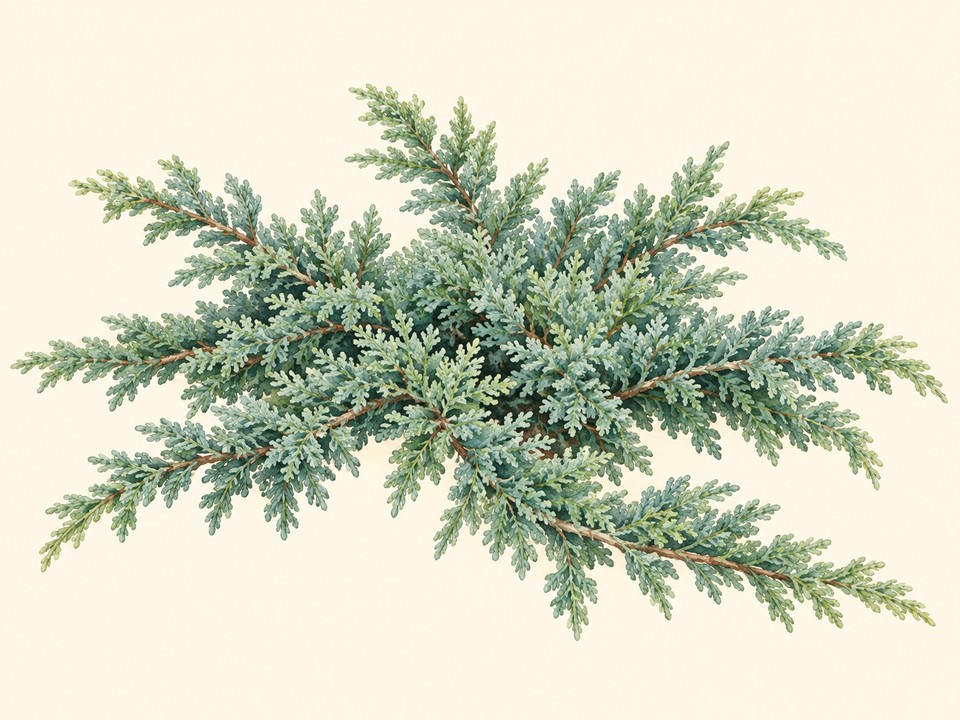
Trailing Juniper (Juniperus horizontalis) is a low spreading evergreen with blue-green foliage.
On this page
Botanical name: Juniperus horizontalis Group: Ground cover
Trailing Juniper (creeping juniper) is a low, wide-spreading evergreen with scale-like blue-green foliage that often takes on purple tones in winter. It needs full sun and well-drained soil and is very drought tolerant once established.[1]
When to Plant Trailing Juniper
Plant Trailing Juniper in fall or early spring in Central Texas. A fall planting establishes roots through the cool season and is ready to grow and bloom the following year. Spring planting works too if you water through the first summer.[2]
If you would like a hand, the Texas Allied Landscape team can plant your Trailing Juniper and keep it thriving.
Planting
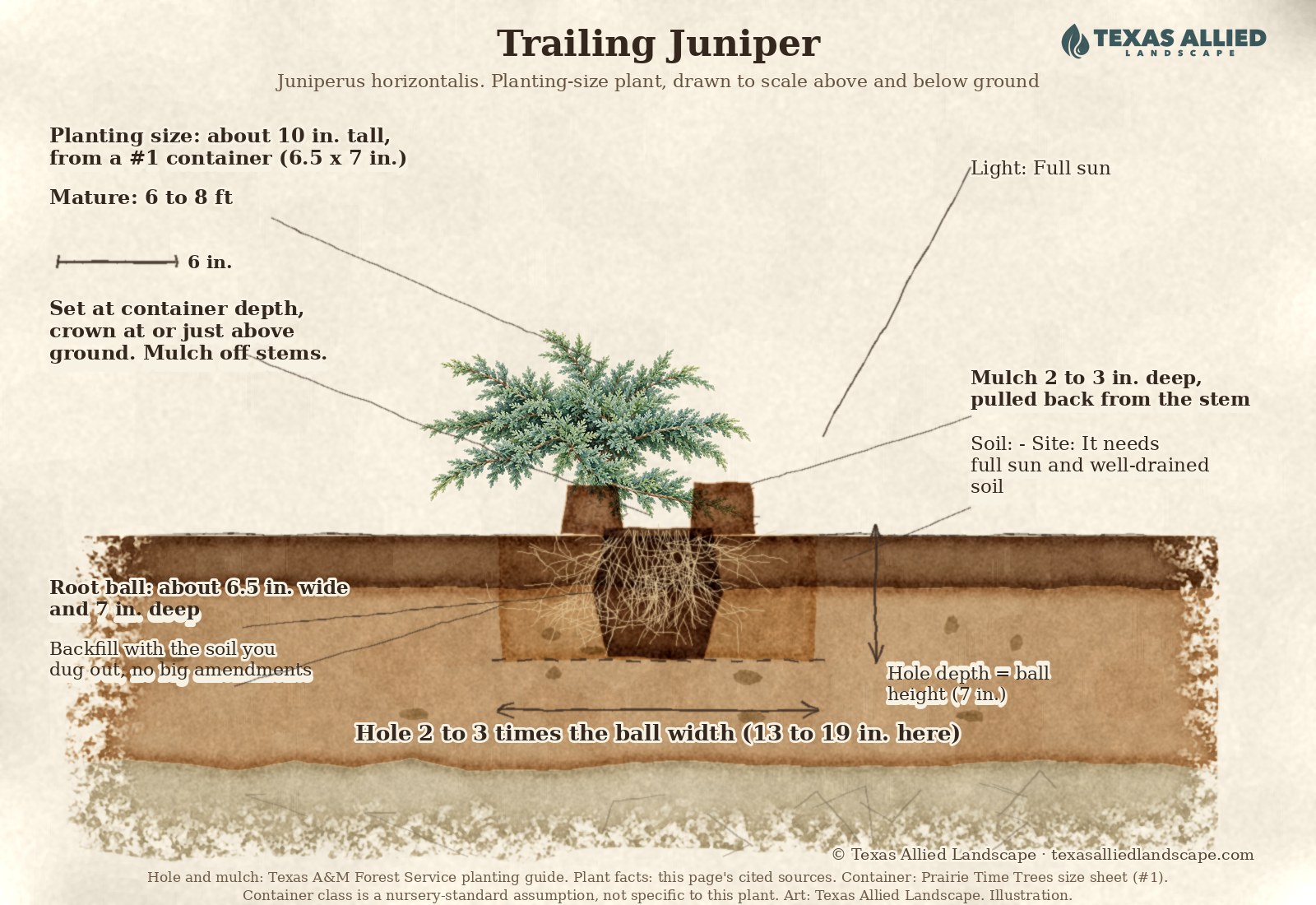
- Dig a hole twice as wide as the pot and no deeper, with sloping sides. Set the plant at the same depth it grew in its pot. Loosen any circling roots before backfilling.[3]
- For a new bed, clear grass and weeds first, roots and all.[3]
- Give it room. One plant covers 6 to 8 feet across over several years, staying just inches tall. Plant in groups and mulch between them until they knit.[4] Space plants for that full size, not the pot size.[3]
- Site: It needs full sun and well-drained soil and is very drought tolerant once established.[1]
- Timing: A fall planting establishes roots through the cool season and is ready to grow and bloom the following year. Spring planting works too if you water through the first summer.[2]
- Soak it well at planting and keep watering while the roots establish.[3] Once it is established, a fall planting is ready to grow and bloom the following year. Spring planting works too if you water through the first summer.[2]
- Mulch 2 to 4 inches, kept a few inches away from the stems to prevent crown rot. It needs no staking or other support.[3]
Care Instructions for Your Trailing Juniper
How to Water a Trailing Juniper
Watering
For sunny, dry spots, yes. Creeping junipers like Blue Rug give an evergreen mat that handles heat and drought once established. Shade and wet soil kill them.[5]
Sunlight and soil
Mulch while the plants fill in, and hand-pull what comes through. A mature dense mat shades out most weeds on its own.[6]
Planting
Moderately. One plant covers 6 to 8 feet across over several years, staying just inches tall. Plant in groups and mulch between them until they knit.[4]
Pruning and maintenance
It is one of the best uses. The rooting stems stabilize sunny banks where mowing is impossible.[7]
Trailing juniper questions
Is trailing juniper a good groundcover for Texas?
For sunny, dry spots, yes. Creeping junipers like Blue Rug give an evergreen mat that handles heat and drought once established. Shade and wet soil kill them.[5]
How fast does trailing juniper spread?
Moderately. One plant covers 6 to 8 feet across over several years, staying just inches tall. Plant in groups and mulch between them until they knit.[4]
How do I keep weeds out of a juniper mat?
Mulch while the plants fill in, and hand-pull what comes through. A mature dense mat shades out most weeds on its own.[6]
Can I use trailing juniper on a slope?
It is one of the best uses. The rooting stems stabilize sunny banks where mowing is impossible.[7]
Next step: Our horticulturalists can plant and mulch a juniper slope so it knits before the weeds find it.
Let Texas Allied Landscape care for your Trailing Juniper
Trailing Juniper does best with steady, knowledgeable care. That means the right water, pruning at the right time, and a trained eye for stress. The horticulturists at Texas Allied Landscape care for plants like yours across the San Antonio area. They are backed by over 40 years of landscape experience.
In these community guides
Sources
- NC State Extension, "Juniperus horizontalis"https://plants.ces.ncsu.edu/plants/juniperus-horizontalis/ab
- October Gardening Checklist, Travis County AgriLife Extension.https://travis-tx.tamu.edu/about-2/horticulture/monthly-gardening-calendar-for-austin-area/october-gardening-checklist-for-austin-and-central-texas/abc
- Back to basics: Planting perennials, SAWS Garden Style San Antonio.https://www.gardenstylesanantonio.com/garden-articles/back-to-basics-planting-perennials/abcde
- Landscape Source Nursery, "Blue Rug Juniper."https://landscapesourcenursery.com/plant/blue-rug-juniperabc
- Landscape Source Nursery, "Blue Rug Juniper - North Texas Care Guide."https://landscapesourcenursery.com/plant/blue-rug-juniperab
- Lady Bird Johnson Wildflower Center, Mr. Smarty Plants, "Weeds in Blue Rug juniper."https://www.wildflower.org/expert/show.php?frontpage=true&id=4729ab
- Lady Bird Johnson Wildflower Center, Mr. Smarty Plants, "Plants for difficult site."https://www.wildflower.org/expert/show.php?id=5880ab