
Property owners
Ageratum
- Plant
- Ageratum
- Botanical name
- Ageratum houstonianum
- Group
- Low shrubs and perennials
Ageratum (Ageratum houstonianum): light, water, soil, size and care for San Antonio area landscapes.
On this page
Botanical name: Ageratum houstonianum.
Height
Half to 1 ft tall, mounding,.[1]
Spread
Plant with 10-12 inches of space.
Foliage
Frost-tender herbaceous annual.
Seasonal behavior
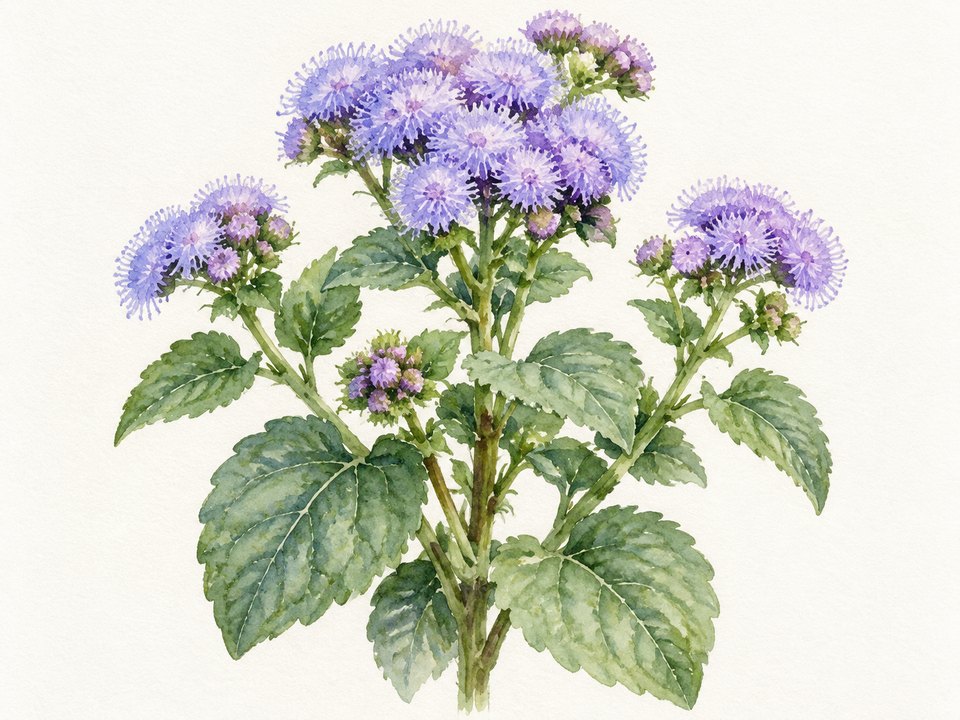
Fluffy aster-like flower clusters in blue, pink or white, summer into fall; flowers hold color a long time (the genus name means 'not old age').
Will ageratum survive winter here?
Ageratum houstonianum is a frost-tender annual - dying back with frost is normal. Replant in spring.
Light
Full sun to part shade; morning sun with afternoon relief is best in July and August.[2]
Soil and drainage
Rich, moist, well-drained soil; moderately drought tolerant once established.[2]
When to Plant Ageratum
Ageratum is a warm-season annual in San Antonio. Plant seeds or transplants after the last spring frost, from mid-March on, once the soil has warmed. It grows through the warm season and is removed or replanted after frost.
If you would like a hand, the Texas Allied Landscape team can plant your Ageratum and keep it thriving.
Planting
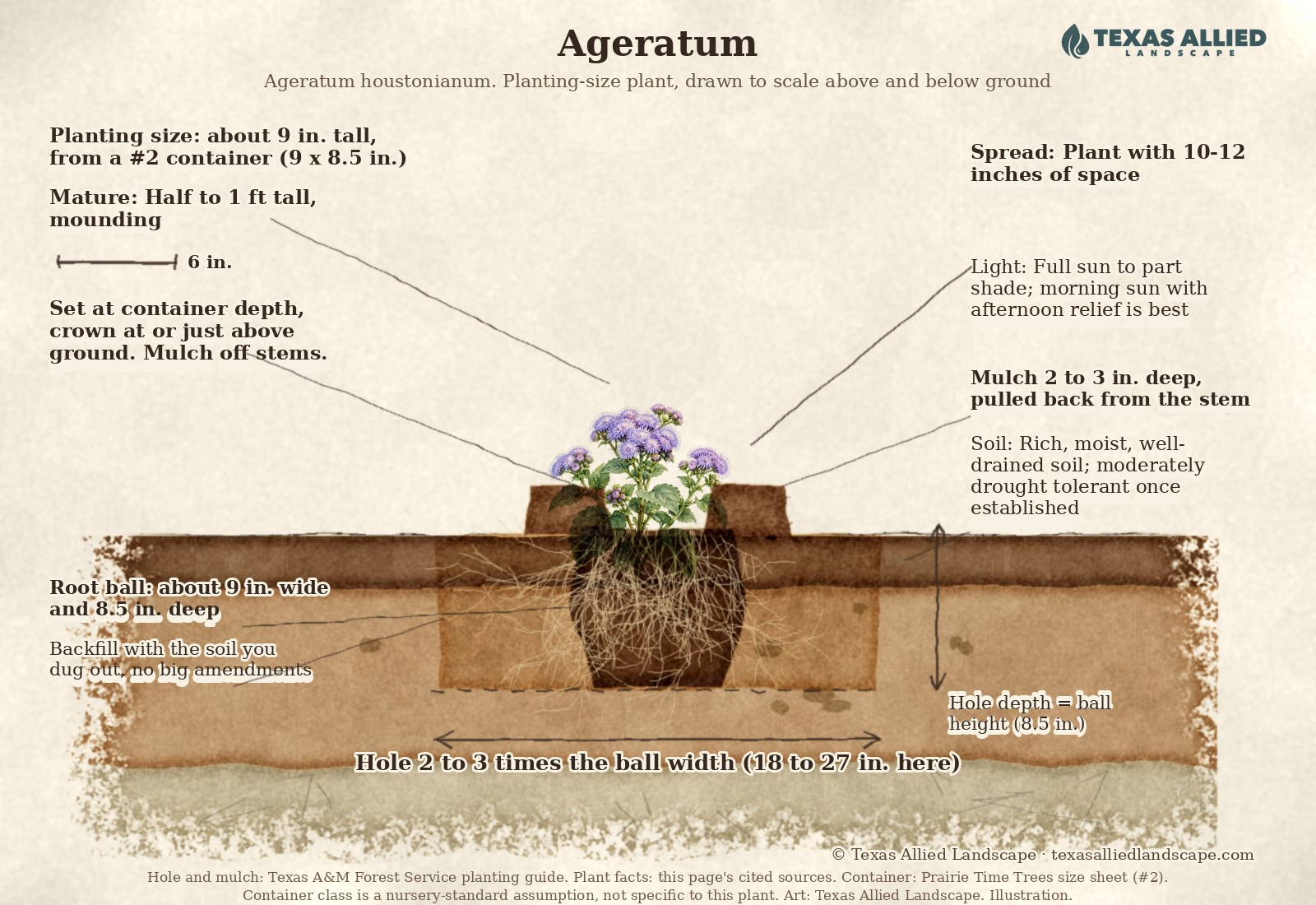
- Dig a hole twice as wide as the pot and no deeper, with sloping sides, and set the plant at the same depth it grew in its pot. Loosen any circling roots before backfilling.[3]
- For a new bed, clear grass and weeds first, roots and all.[3]
- Give it room: Half to 1 ft tall, mounding,.[1] Space plants for that full size, not the pot size.[3]
- Site: Keep it watered, give it morning sun with afternoon relief in July and August, and it rebounds when nights cool. Deadheading spent flowers keeps new blooms coming.[2]
- Timing: Plant seeds or transplants after the last spring frost, from mid-March on, once the soil has warmed.
- Soak it well at planting and keep watering while the roots establish.[3]
- Mulch 2 to 4 inches, kept a few inches away from the stems to prevent crown rot. It needs no staking or other support.[3]
Care Instructions for Your Ageratum
How to Water an Ageratum
Mature height and spread
Half to 1 ft tall, mounding,.[1] Plant with 10-12 inches of space.
Normal seasonal behavior
Fluffy aster-like flower clusters in blue, pink or white, summer into fall; flowers hold color a long time (the genus name means 'not old age').
Ageratum questions
Is ageratum an annual or perennial in Central Texas?
An annual here - it blooms from spring until the first hard freeze, then it is done. Some self-seed and pop back up the next spring.[4]
Why did my ageratum stop blooming in summer?
Extreme heat slows it down. Keep it watered, give it morning sun with afternoon relief in July and August, and it rebounds when nights cool. Deadheading spent flowers keeps new blooms coming.[2]
How much sun does ageratum need?
Full sun to part shade. In Central Texas it actually prefers a little afternoon shade - all-day blazing sun scorches it.[5]
Is ageratum good for pollinators?
Yes - the fluffy blue flowers draw butterflies and bees all season, one reason it earns bed space year after year.[6]
Let Texas Allied Landscape care for your Ageratum
Ageratum does best with steady, knowledgeable care: the right water, pruning at the right time, and a trained eye for stress. The horticulturists at Texas Allied Landscape care for plants like yours across the San Antonio area, backed by over 40 years of landscape experience.
In these community guides

Illustration. Illustration based on reference photos of Arbors of Fair Oaks. Not a single literal view. Arbors of Fair Oaks Landscaping
Bring your address, unit and yard ideas. Texas Allied Landscape helps design the planting and irrigation, prepare the…
- Art in progress
Cordillera Ranch Landscaping
Bring your address, survey and yard ideas. We check the right guideline set, plan planting and irrigation, prepare the…

Illustration. Illustration based on reference photos of Johnson Ranch. Not a single literal view. Johnson Ranch Landscaping
Share your Johnson Ranch address, survey and yard ideas. Texas Allied Landscape can help plan planting, irrigation and…
Sources
- Ageratum houstonianum (Floss Flower, Mexican Ageratum), North Carolina Extension Gardener Plant Toolbox.https://plants.ces.ncsu.edu/plants/ageratum-houstonianum/abc
- Gardener's Path, "How to Grow and Care for Ageratum."https://gardenerspath.com/plants/flowers/grow-ageratum/abcd
- Back to basics: Planting perennials, SAWS Garden Style San Antonio.https://www.gardenstylesanantonio.com/garden-articles/back-to-basics-planting-perennials/abcde
- Missouri Botanical Garden Plant Finder, "Ageratum houstonianum 'Blue Horizon'."https://www.missouribotanicalgarden.org/PlantFinder/PlantFinderDetails.aspx?hf=1&isprofile=0&taxonid=260781↑
- Missouri Botanical Garden Plant Finder, "Ageratum houstonianum."https://www.missouribotanicalgarden.org/PlantFinder/PlantFinderDetails.aspx?hf=1&isprofile=0&taxonid=260781↑
- Gardener's Path, "How to Grow and Care for Ageratum."https://gardenerspath.com/plants/flowers/grow-ageratum/↑