
Property owners
Dwarf Chinese Holly
- Plant
- Dwarf Chinese Holly
- Botanical name
- Ilex cornuta 'Rotunda'
- Cultivar
- 'Rotunda'
- Group
- Medium shrubs and perennials
Dwarf Chinese Holly: Full sun to part shade.[^dh-ncsu]
On this page
Botanical name: Ilex cornuta 'Rotunda'.
Plant group: Medium shrubs and perennials.
Light
Full sun to part shade.[1]
Soil and drainage
Most well-drained soils; it handles heat, humidity and drought once established.[1]
Height
3-4 feet.[2]
Spread
6-8 feet - a dense, wide, rounded shrub.[2]
Foliage
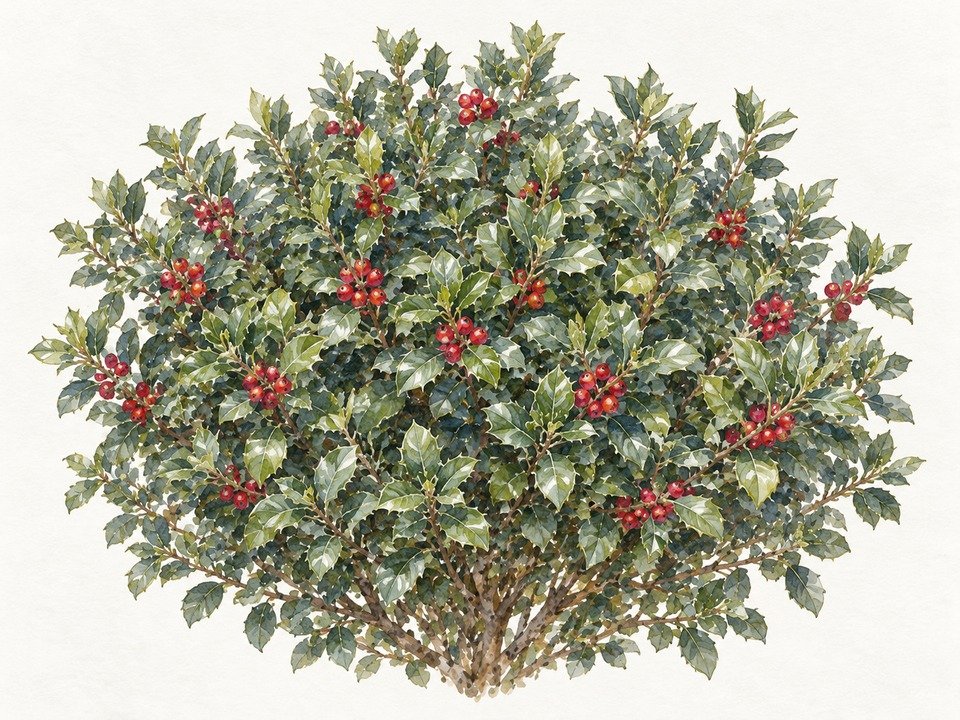
Dark green, rectangular, spiny leaves densely packed on the stems; evergreen.[2]
Water
Medium to establish, then drought tolerant.[1]
Pruning
Low - it holds its dense rounded form naturally; shear to keep it tight.[2]
Seasonal behavior
Small white flowers in spring; sparse red fruit on this dwarf form. Evergreen structure year-round.[2]
When to Plant Dwarf Chinese Holly
Plant Dwarf Chinese Holly in fall or early spring in Central Texas.[1]
If you would like a hand, the Texas Allied Landscape team can plant your Dwarf Chinese Holly and keep it thriving.
Planting
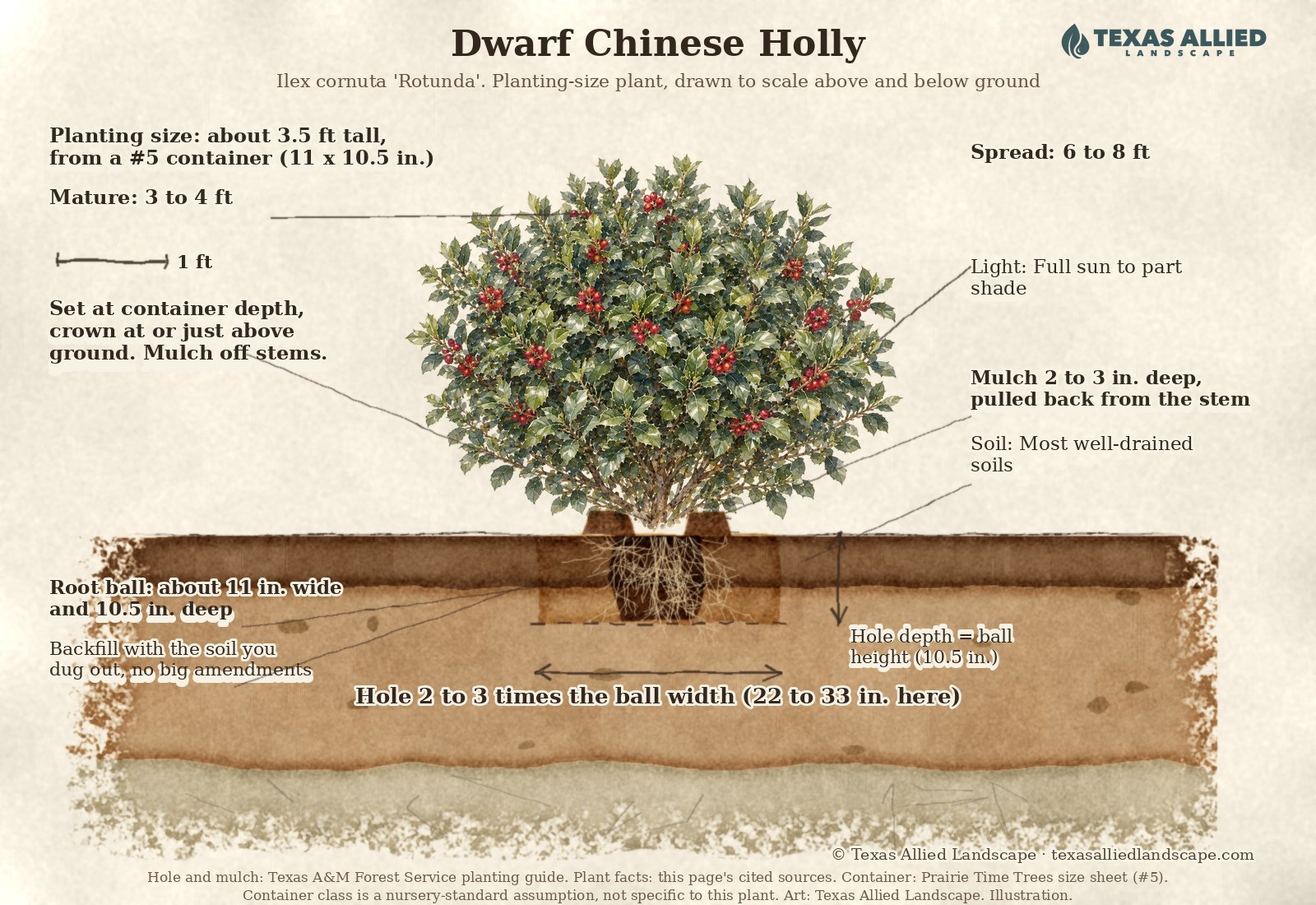
- Dig a hole at least twice as wide as the root ball and no deeper, so the roots can grow out into the surrounding soil.[3]
- Fill the empty hole with water and check the drainage. If it takes longer than 24 hours to drain, choose another spot: roots sitting under water will kill the plant.[3]
- Set it with the root collar (where the stems meet the roots) level with the ground, and take off the container and any twine or bags before backfilling.[3]
- Backfill with the same soil that came out of the hole, without amendments, and settle it with water rather than packing it down.[3]
- Give it room: 6-8 feet - a dense, wide, rounded shrub.[2] Space plants so they can reach that size without crowding.
- Site and soil: Full sun to part shade.[1] Most well-drained soils; it handles heat, humidity and drought once established.[1]
- Timing: Plant Dwarf Chinese Holly in fall or early spring in Central Texas.[1]
- Water regularly through the first growing season while roots establish, without overwatering: a thorough soaking beats light, frequent watering.[3]
- Mulch 2 to 3 inches deep, up to but not touching the stems. It needs no staking or other support. Do not fertilize during the first growing season.[3]
Care Instructions for Your Dwarf Chinese Holly
Sunlight
Full sun to part shade.[1]
Soil and drainage
Most well-drained soils; it handles heat, humidity and drought once established.[1]
Mature height and spread
3-4 feet.[2] 6-8 feet - a dense, wide, rounded shrub.[2]
Pruning
Low - it holds its dense rounded form naturally; shear to keep it tight.[2]
Normal seasonal behavior
Small white flowers in spring; sparse red fruit on this dwarf form. Evergreen structure year-round.[2]
Dwarf Chinese holly questions
How big does dwarf Chinese holly get?
3-4 feet tall but 6-8 feet wide - it is wider than tall, so give it room to spread.[4]
Is dwarf Chinese holly drought tolerant?
Yes - like other Chinese hollies it handles heat, humidity and drought once established.[5]
Does dwarf Chinese holly have berries?
Few - the dwarf form fruits sparsely; it is grown for its dense evergreen form, not berries.[6]
Is dwarf Chinese holly prickly?
Yes - the leaves carry 5-7 spines, so keep it out of walkways and play areas.[7]
Next step: Our horticulturalists can suggest a friendlier evergreen where people brush past.
Let Texas Allied Landscape care for your Dwarf Chinese Holly
Dwarf Chinese Holly does best with steady, knowledgeable care: the right water, pruning at the right time, and a trained eye for stress. The horticulturists at Texas Allied Landscape care for plants like yours across the San Antonio area, backed by over 40 years of landscape experience.
In these community guides
Sources
- NC State Extension, "Ilex cornuta 'Rotunda'."https://plants.ces.ncsu.edu/plants/ilex-cornuta-rotunda/abcdefghij
- Landscape Professionals, "Ilex cornuta 'Rotunda'."https://www.landscapeprofessionals.org/images/lp/ToolkitsTraining/documents/TechnicalTips/HollyDwarfChinese.pdfabcdefghij
- Planting, Texas A&M Forest Service.https://tfsweb.tamu.edu/trees/tree-care/planting/abcdef
- Landscape Professionals, "Ilex cornuta 'Rotunda'."https://www.landscapeprofessionals.org/images/lp/ToolkitsTraining/documents/TechnicalTips/HollyDwarfChinese.pdf↑
- NC State Extension, "Ilex cornuta 'Rotunda'."https://plants.ces.ncsu.edu/plants/ilex-cornuta-rotunda/↑
- Landscape Professionals, "Ilex cornuta 'Rotunda'."https://www.landscapeprofessionals.org/images/lp/ToolkitsTraining/documents/TechnicalTips/HollyDwarfChinese.pdf↑
- Landscape Professionals, "Ilex cornuta 'Rotunda'."https://www.landscapeprofessionals.org/images/lp/ToolkitsTraining/documents/TechnicalTips/HollyDwarfChinese.pdf↑