
Property owners
Mesquite
- Plant
- Mesquite
- Botanical name
- Prosopis glandulosa
- Group
- Shade trees
Mesquite: what is known about light, water, soil and care for San Antonio area landscapes.
On this page
Light
Mesquite needs full sun only.[1]
Soil and drainage
It is one of the better shade trees for sandy soils.
Spread
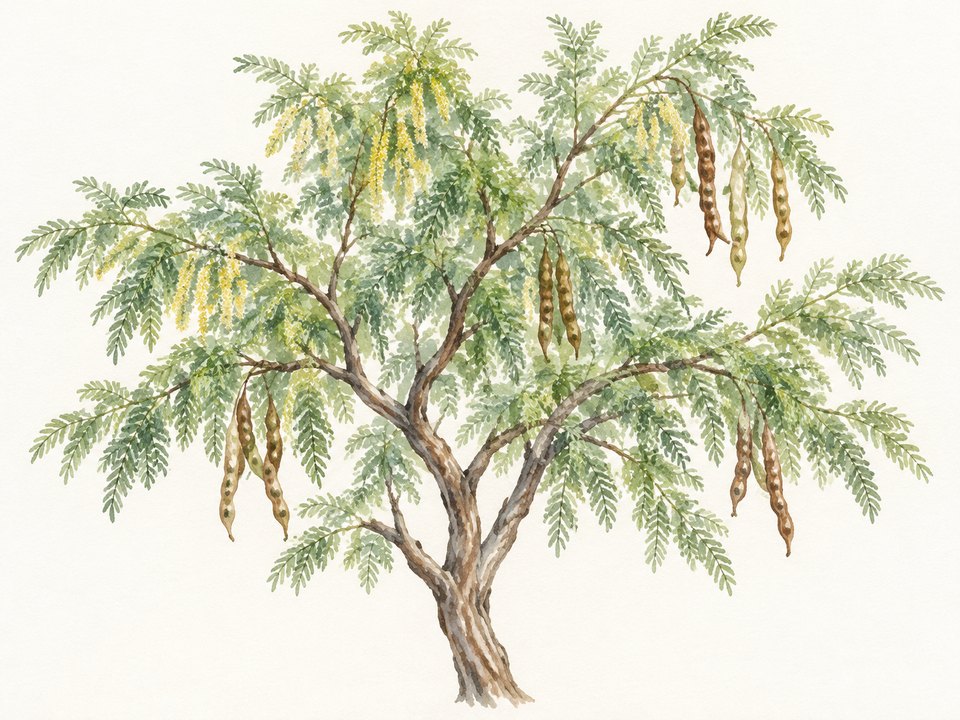
It spreads 30 to 35 feet wide. It has wide-spreading, drooping branches.
Foliage
It is deciduous, with long compound leaflets and stout thorns. The Maverick variety is thornless.
Water
It needs very low water. There is no need to overwater. If watering ever feels like a guessing game, our horticulturists can care for your Mesquite on a schedule that fits your yard.
Pruning
Pruning is optional. Cut only at a bud or branch. Focus on dead, damaged, or rubbing branches. Remove no more than 25% of the canopy in any five-year span.
Seasonal behavior
It flowers periodically during warm weather and fruits even during drought. Its wood is a valued hardwood and barbecue favorite.
When to Plant Mesquite
Spring through early summer is the best window to plant Mesquite in San Antonio. It roots actively in warm soil. Young plants can be frost-tender. A plant set out in spring establishes well before winter.
Fall planting leaves a young plant too little time before cold weather.
If you would like a hand, the Texas Allied Landscape team can plant your Mesquite and keep it thriving.
Planting
- Dig a hole at least twice as wide as the root ball and no deeper - a square hole keeps the roots from settling too deep while letting them grow out into the surrounding soil.[2]
- Fill the empty hole with water and check the drainage. If it takes longer than 24 hours to drain, choose another spot: roots sitting under water will kill the tree.[2]
- Set it with the root collar (the flare just above the roots) level with or slightly above the ground, and take off all wire, twine, containers and bags before backfilling.[2]
- Backfill with the same soil that came out of the hole, without amendments, and settle it with water rather than packing it down.[2]
- For the site, it needs full sun only.[1]
- For timing, spring through early summer is the best window to plant Mesquite in San Antonio.
- Water for at least the first two years, without overwatering: a thorough soaking beats light, frequent watering.[2]
- Mulch 2 to 3 inches deep, out to the drip line and up to but not touching the trunk. Stake only if it cannot stand on its own and take stakes off within a year - most need no support. Do not fertilize during the first growing season.[2]
Care Instructions for Your Mesquite
How to Water a Mesquite
It needs very low water. There is no need to overwater.
Sunlight
Mesquite needs full sun only.[1]
Soil and drainage
It is one of the better shade trees for sandy soils.
Mature height and spread
It spreads 30 to 35 feet wide. It has wide-spreading, drooping branches.
Pruning
Pruning is optional. Cut only at a bud or branch. Focus on dead, damaged, or rubbing branches. Remove no more than 25% of the canopy in any five-year span.
Normal seasonal behavior
It flowers periodically during warm weather and fruits even during drought. Its wood is a valued hardwood and barbecue favorite.
Mesquite questions
Is mesquite a good yard tree?
It depends on your lot. Honey mesquite is a tough native with beautiful filtered shade. It also has thorns, drops pods, and spreads aggressively by seed. Many people love it. Mow-and-blow yards hate it.[3]
Next step: Our horticulturalists can help you decide, or suggest the thornless Maverick selection instead.
Why is mesquite so hard to kill?
It has a taproot that can run very deep. Cutting the top just makes it resprout. That is why it took over Texas rangeland.[4]
Are mesquite pods edible?
Yes - the sweet pods were a staple food for native peoples. Livestock and wildlife devour them. They are also the main litter complaint.[5]
How much water does mesquite need?
It needs almost none once established. Give it deep, infrequent watering only. Shallow watering grows weak surface roots.[6]
Let Texas Allied Landscape care for your Mesquite
Mesquite does best with steady, knowledgeable care: the right water, pruning at the right time, and a trained eye for stress. The horticulturists at Texas Allied Landscape care for plants like yours across the San Antonio area, backed by over 40 years of landscape experience.
In these community guides
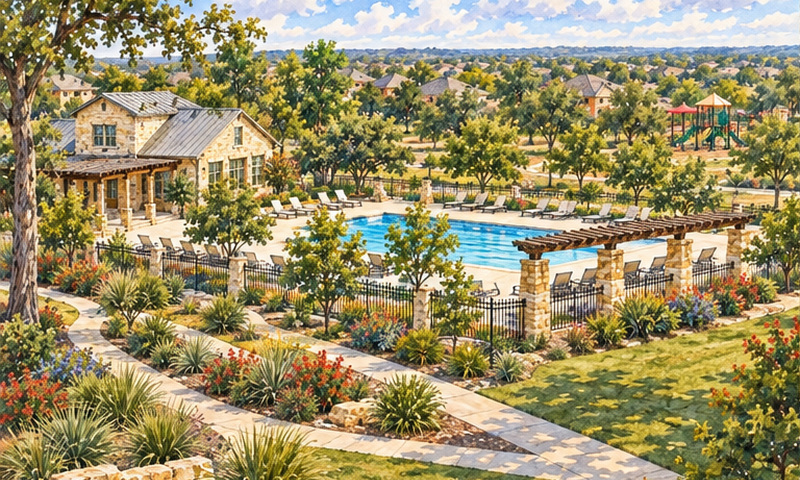
Illustration. Illustration based on reference photos of Redbird Ranch. Not a single literal view. Redbird Ranch Landscaping
Bring your survey and yard ideas. Texas Allied Landscape helps design planting and irrigation, prepare the review…

Illustration. Illustration based on reference photos of Johnson Ranch. Not a single literal view. Johnson Ranch Landscaping
Share your Johnson Ranch address, survey and yard ideas. Texas Allied Landscape can help plan planting, irrigation and…
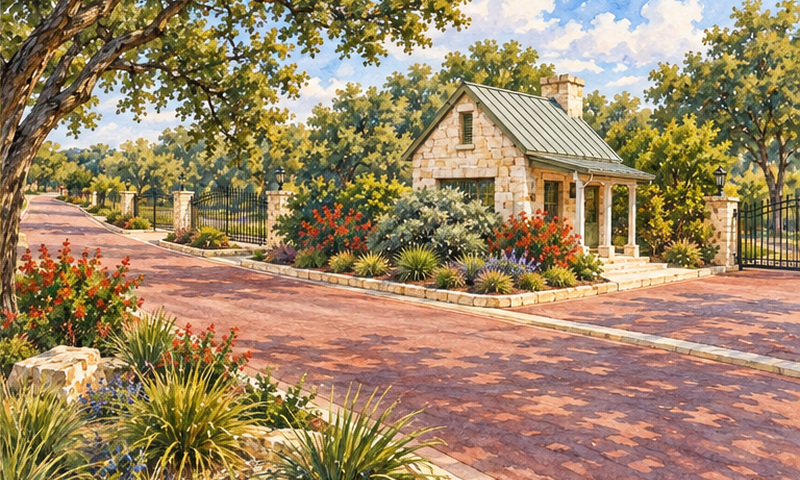
Illustration. Illustration based on reference photos of Rogers Ranch - Point Bluff and other neighborhoods. Not a single literal view. Rogers Ranch Landscaping
Plan your Rogers Ranch landscape with lawn, tree and irrigation guidance. Get help with the review package, approved…
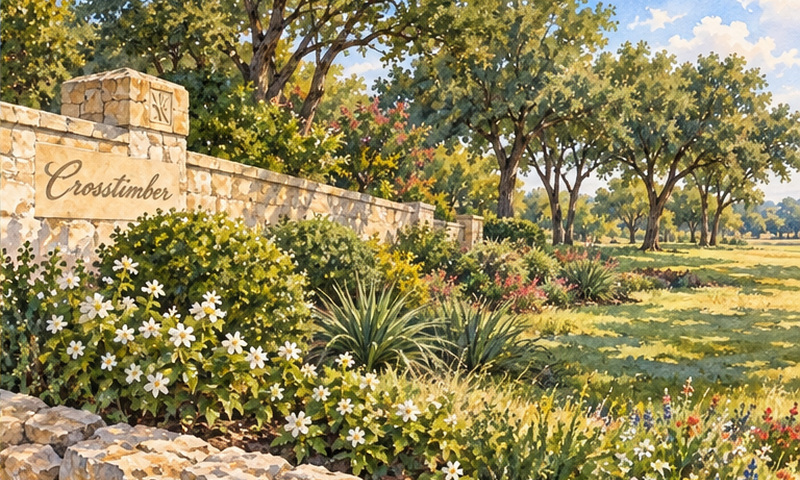
Illustration. Illustration based on reference photos of Shavano Rogers Ranch - Crosstimber. Not a single literal view. Crosstimber Landscaping
Plan your Crosstimber plants, shade and irrigation. Get help matching your lot rules, preparing the review package and…
Sources
- Honey Mesquite, SAWS Garden Style San Antonio.https://www.gardenstylesanantonio.com/plants/honey-mesquite/abc
- Tree Care - Planting, Texas A&M Forest Service.https://tfsweb.tamu.edu/trees/tree-care/planting/abcdef
- Texas A&M Forest Service, "Honey Mesquite."https://texastreeid.tfs.tamu.edu/content/pdf/Honey_Mesquite.pdf↑
- Texas A&M Range Plants, "Honey Mesquite."https://rangeplants.tamu.edu/plant/honey-mesquite/↑
- Texas State Historical Association, "Mesquite."https://www.tshaonline.org/handbook/entries/mesquite↑
- Native Plant Society of Texas, "Prosopis glandulosa."https://www.npsot.org/posts/native-plant/prosopis-glandulosa/↑