
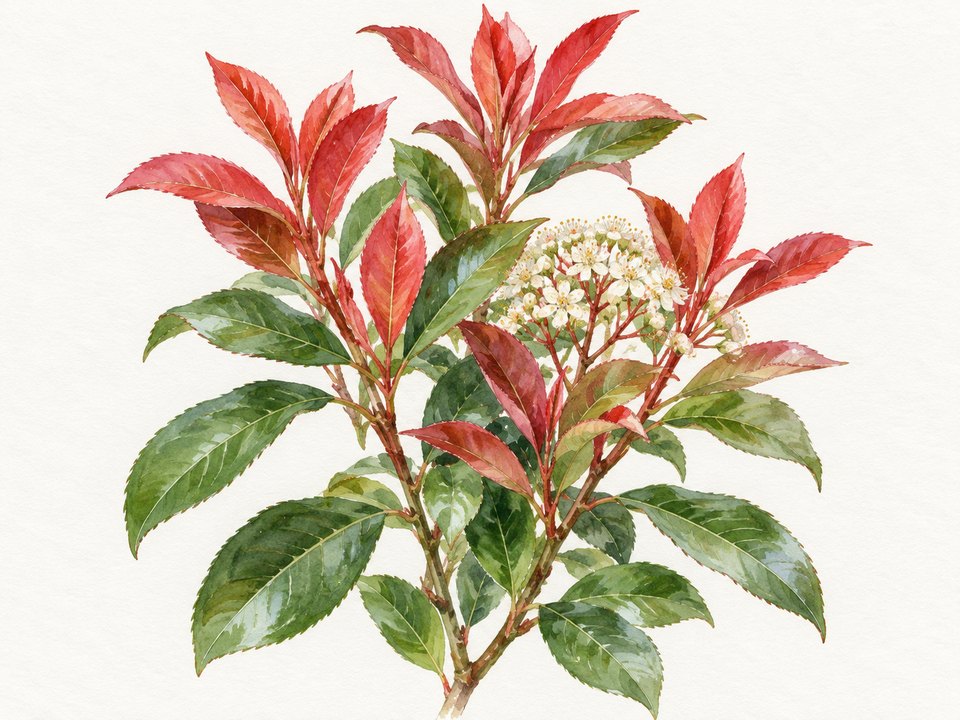
Property owners
Photinia
- Plant
- Photinia
- Botanical name
- Photinia x fraseri
- Type
- Hybrid
- Group
- Prohibited examples
Photinia: light, water, soil, size and care for San Antonio area landscapes.
On this page
Photinia is a common hedge plant in the San Antonio area.
Height
Hedge plants can grow for many years, with the main stalks becoming quite large.[1]
Seasonal behavior
Individual plants can decline or die even when a hedge is carefully watered. Leaf and stalk problems are a known issue in the area.
Why Photinia is a problem here
Red-tip photinia hedges across the San Antonio area have been lost to Entomosporium leaf spot. It is a fungal disease that this shrub cannot reliably shake in our climate. Texas A&M plant pathologists note how susceptible photinia is. A struggling photinia hedge usually means bare stems within a few years.[2][1]
What to plant instead
For an evergreen hedge that holds up here:
 Illustration
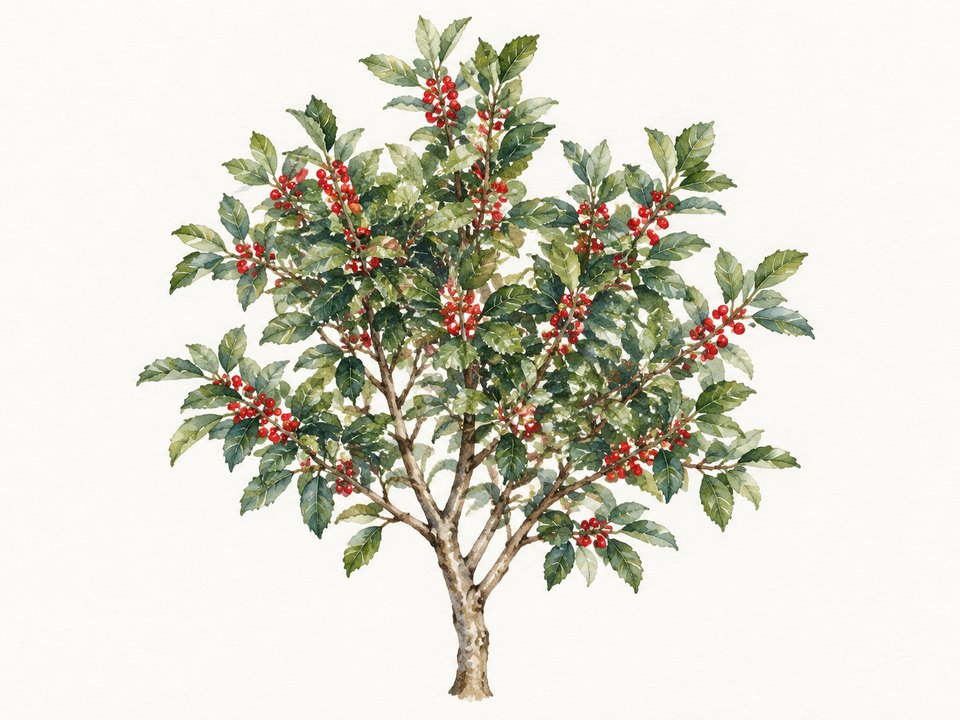
Yaupon HollyIlex vomitoriaIllustration 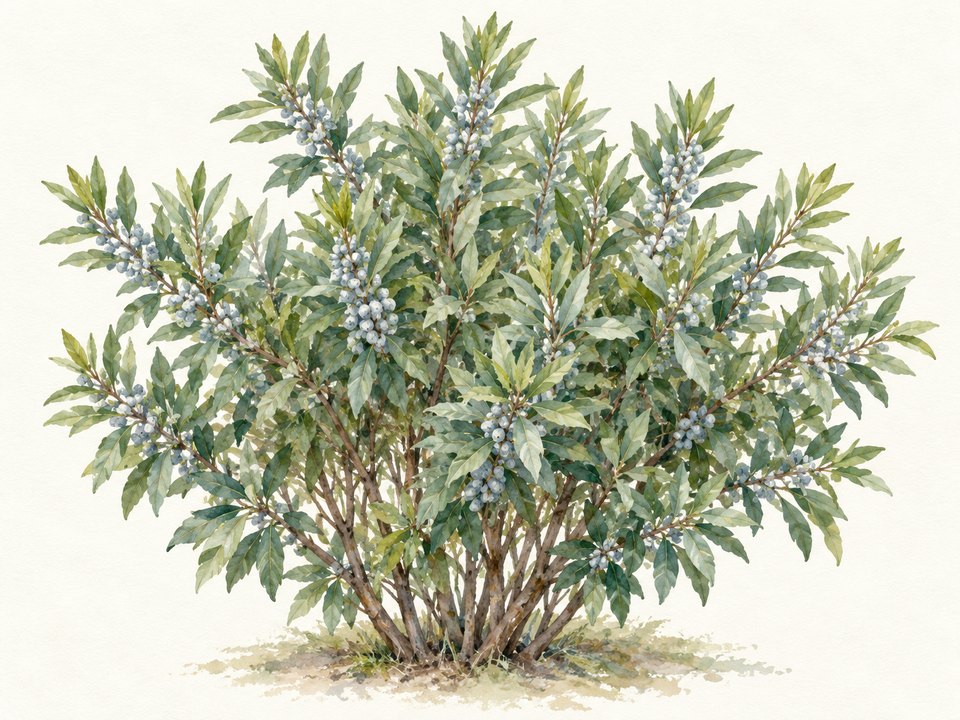 Illustration
Wax MyrtleMorella ceriferaIllustration 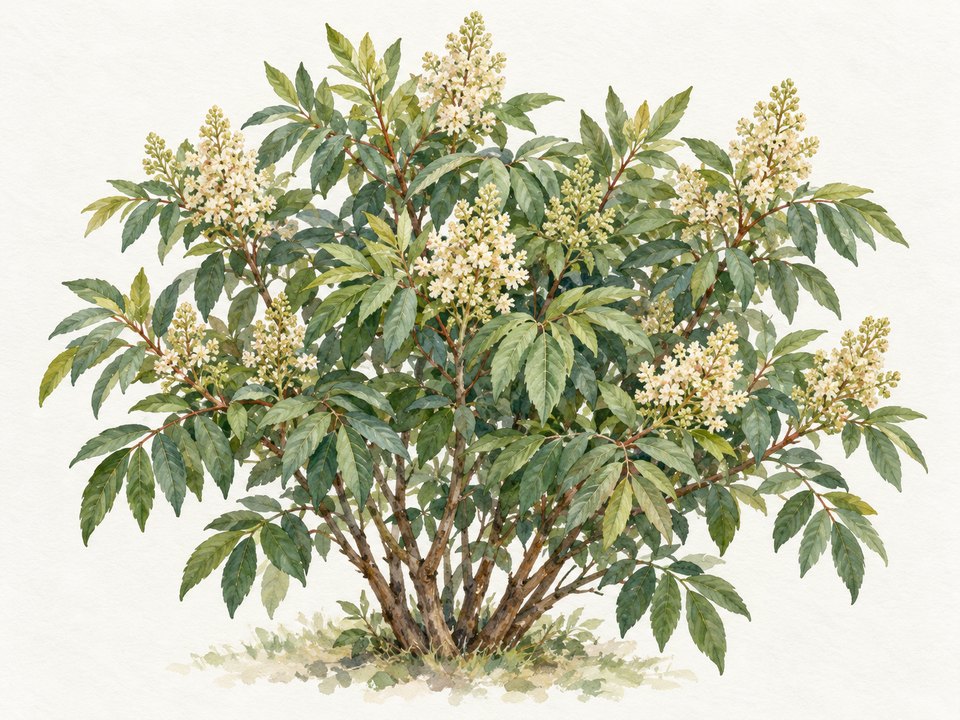 Illustration
Evergreen SumacRhus virensIllustration
If it is already on your property, the Texas Allied Landscape team can talk through removal and a replacement plan.
Care Instructions for Your Photinia
How to Water a Photinia
Mature height and spread
Hedge plants can grow for many years, with the main stalks becoming quite large.[1]
Normal seasonal behavior
Individual plants can decline or die even when a hedge is carefully watered. Leaf and stalk problems are a known issue in the area.
Photinia questions
What are the red-purple spots on my photinia's leaves?
They are almost certainly Entomosporium leaf spot, the disease photinia is famous for in Texas. It causes small red spots that merge and defoliate the shrub. It spreads by splashing water, so water at the base, rake fallen leaves, and space plants for airflow.[2]
Next step: Heavy leaf spot year after year usually means replacing the hedge - our horticulturalists can confirm the disease and suggest tougher look-alikes.
Why isn't my photinia's new growth red?
The red flush comes with new growth. Hard pruning or active spring growth triggers it. An unpruned, mature plant stays mostly green. A late-winter trim both shapes the plant and brings back the red tips.[3]
How do I prune photinia without making leaf spot worse?
Prune in dry weather. Disinfect pruners between cuts. Remove infected clippings from the bed instead of dropping them. Skip overhead watering entirely.[4]
How fast does photinia grow as a screen?
It grows fast. That is why red tip photinia became the classic Texas hedge. It often grows 2 to 3 feet a year into a dense 10-to-15-foot screen. The tradeoff is the leaf spot pressure, which is worst exactly where hedges are planted tight.[5]
In these community guides
Illustration. Illustration based on reference photos of Mountain Springs Ranch. Not a single literal view. Mountain Springs Ranch Landscaping
Plan your Mountain Springs Ranch yard with planting, lawn and irrigation guidance. Get help from the review package…

Illustration. Illustration based on reference photos of Rogers Ranch - Point Bluff and other neighborhoods. Not a single literal view. Rogers Ranch Landscaping
Plan your Rogers Ranch landscape with lawn, tree and irrigation guidance. Get help with the review package, approved…
Illustration. Illustration based on reference photos of Shavano Rogers Ranch - Crosstimber. Not a single literal view. Crosstimber Landscaping
Plan your Crosstimber plants, shade and irrigation. Get help matching your lot rules, preparing the review package and…
Sources
- Ask Mr. Smarty Plants: Non-native red-tip photinias dying in San Antonio, Lady Bird Johnson Wildflower Center.https://www.wildflower.org/expert/show.php?id=4538&frontpage=trueabc
- Texas A&M AgriLife Extension, Texas Plant Disease Handbook - Photinia.https://plantdiseasehandbook.tamu.edu/landscaping/shrubs/photinia/ab
- University of Arkansas Extension, "Red Tip Photinia."https://www.uaex.uada.edu/yard-garden/in-the-garden/reference-desk/shrubs/red-tip-photenia.aspx↑
- Texas Tree Surgeons, "Photinia Leaf Spot Care Guide."https://texastreesurgeons.com/blog/2019/06/04/photinia-leaf-spot/↑
- Clemson Cooperative Extension, "Photinia (Red Tip)."https://hgic.clemson.edu/factsheet/photinia-red-tip/↑