
Property owners
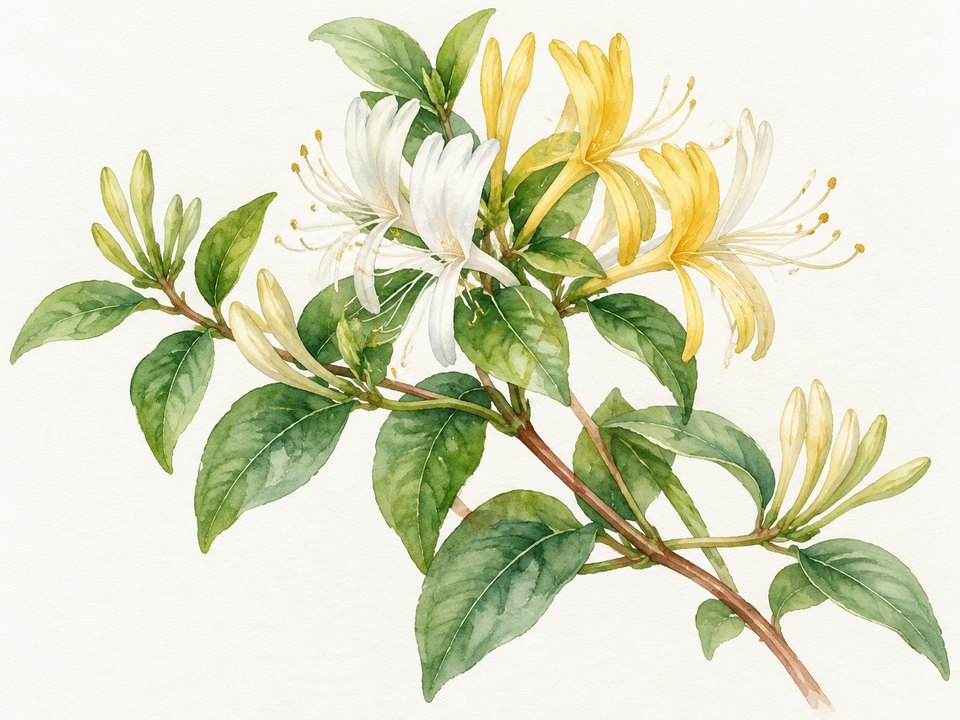
Japanese Honeysuckle
- Plant
- Japanese Honeysuckle
- Botanical name
- Lonicera japonica
- Group
- Prohibited examples
Japanese Honeysuckle: sourced height, spread, foliage and seasonal behavior.
On this page
Its botanical name is Lonicera japonica.
Height
It is a high-climbing, trailing woody vine. It can grow to 80 feet long.[1]
Spread
It forms long woody rhizomes that sprout frequently. They create ground cover under canopies and arbors in forest canopies.
Foliage
It is semi-evergreen to evergreen.
Seasonal behavior
Be careful, because Japanese honeysuckle is invasive. It has few natural enemies in North America. So it spreads widely and out-competes native plants. Its evergreen habit gives it an extra head start.
Why Japanese Honeysuckle is a problem here
Japanese honeysuckle is listed as an invasive species in Texas. It winds over groundcovers, shrubs, and small trees. It smothers them under dense growth. Once it takes hold, it is very hard to clear.[1][2]
What to plant instead
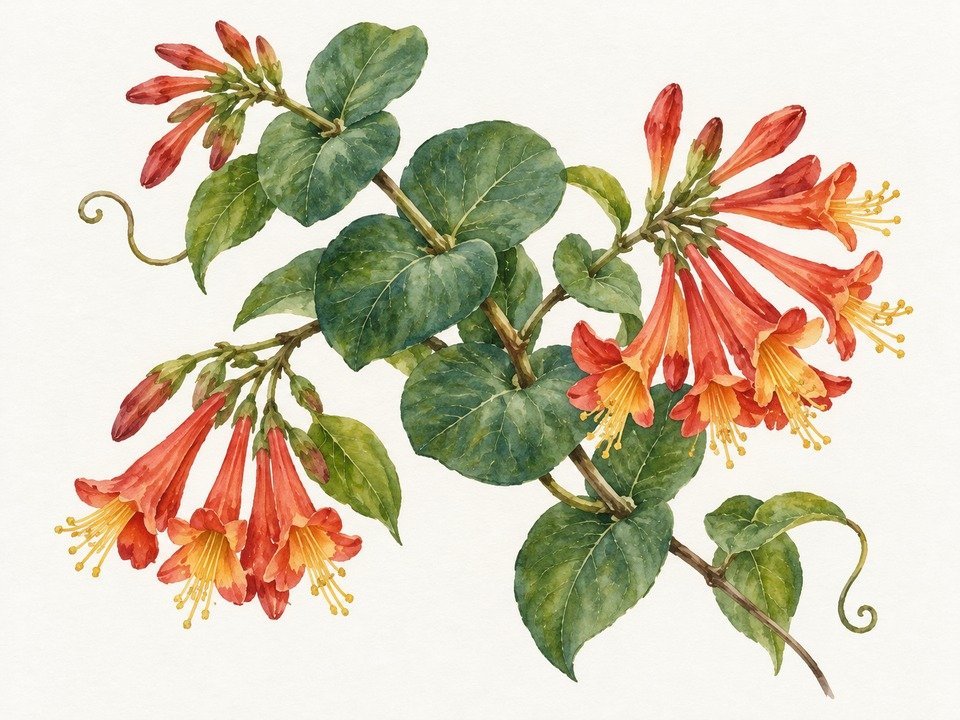
For fragrant bloom and a well-behaved native vine, consider one of these:
 Illustration
Coral HoneysuckleLonicera sempervirensIllustration 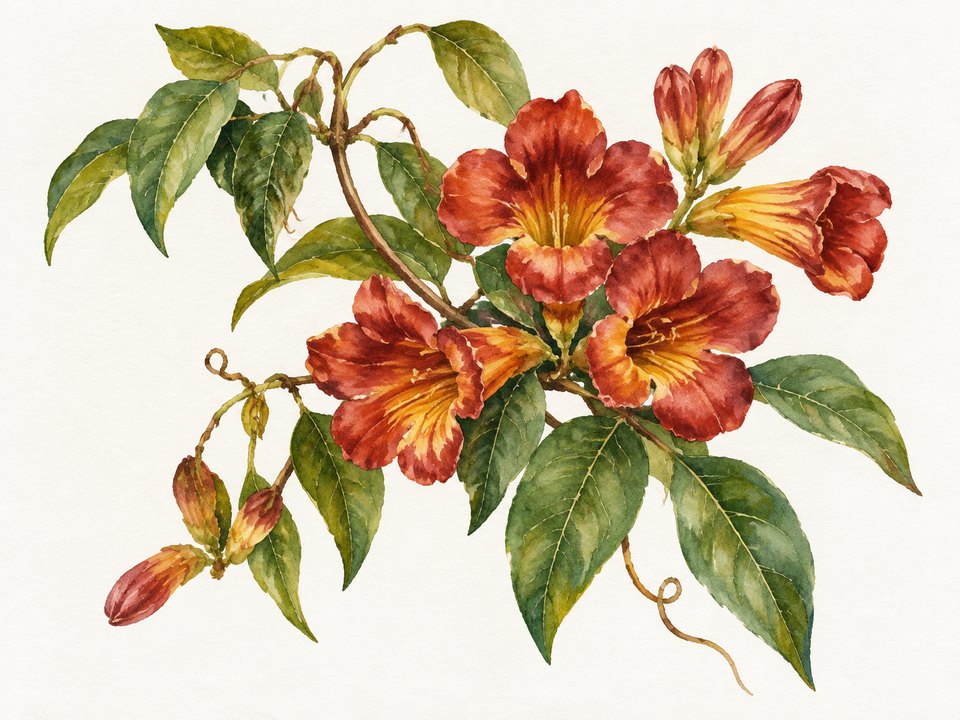 Illustration
CrossvineBignonia capreolataIllustration
If it is already on your property, the Texas Allied Landscape team can help. They can talk through removal and a replacement plan.
Care Instructions for Your Japanese Honeysuckle
How to Water a Japanese Honeysuckle
Mature height and spread
It is a high-climbing, trailing woody vine. It can grow to 80 feet long.[1] It forms long woody rhizomes that sprout frequently. They create ground cover under canopies and arbors in forest canopies.
Normal seasonal behavior
Be careful, because Japanese honeysuckle is invasive. It has few natural enemies in North America. So it spreads widely and out-competes native plants. Its evergreen habit gives it an extra head start.
Japanese honeysuckle questions
Is Japanese honeysuckle invasive in Texas?
Yes. Lonicera japonica is one of the worst invasive vines in the South. It smothers fences, shrubs, and woodland edges.[3]
Next step: Our horticulturalists can clear it and suggest a native vine instead.
How do I get rid of Japanese honeysuckle?
Cut the vines at the base. Treat the stumps with herbicide. Pull or mow regrowth. One pass rarely finishes it.[2]
Why does honeysuckle keep coming back?
It roots wherever a stem touches soil, and the roots survive cutting. Repeated follow-up is the only way.[4]
Is there a good honeysuckle to plant instead?
Yes. Native coral honeysuckle (Lonicera sempervirens) gives you hummingbird flowers without the takeover.[5]
In these community guides
Illustration. Illustration based on reference photos of Deerfield. Not a single literal view. Deerfield Landscaping
Bring your survey, unit and yard ideas. Texas Allied Landscape helps design your outdoor space and prepare the right…
- Art in progress
Esperanza Landscaping
Plan your Esperanza landscape with help on plants, irrigation and the approval package. We check your neighborhood, lot…

Illustration. Illustration based on reference photos of Rogers Ranch - Point Bluff and other neighborhoods. Not a single literal view. Rogers Ranch Landscaping
Plan your Rogers Ranch landscape with lawn, tree and irrigation guidance. Get help with the review package, approved…
Illustration. Illustration based on reference photos of Shavano Rogers Ranch - Crosstimber. Not a single literal view. Crosstimber Landscaping
Plan your Crosstimber plants, shade and irrigation. Get help matching your lot rules, preparing the review package and…
Illustration. Illustration based on reference photos of The Reserve at Schertz II. Not a single literal view. Reserve at Schertz II Landscaping
Plan your Reserve at Schertz II yard with lawn, tree and irrigation guidance. Get help with the review package…
Sources
- Japanese honeysuckle (Lonicera japonica), Texas Invasives.https://www.texasinvasives.org/plant_database/detail.php?symbol=LOJAabc
- University of Maryland Extension, "Japanese Honeysuckle."https://www.extension.umd.edu/resource/invasives-your-woodland-japanese-honeysuckle-updated-2025ab
- Missouri Department of Conservation, "Japanese Honeysuckle Control."https://mdc.mo.gov/trees-plants/invasive-plants/japanese-honeysuckle-control↑
- Missouri Department of Conservation, "Japanese Honeysuckle Control."https://mdc.mo.gov/trees-plants/invasive-plants/japanese-honeysuckle-control↑
- University of Maryland Extension, "Japanese Honeysuckle."https://www.extension.umd.edu/resource/invasives-your-woodland-japanese-honeysuckle-updated-2025↑