
Property owners
Wisteria
- Plant
- Wisteria
- Botanical name
- Wisteria sinensis
- Group
- Prohibited examples
Wisteria: sourced height, spread, foliage and seasonal behavior.
On this page
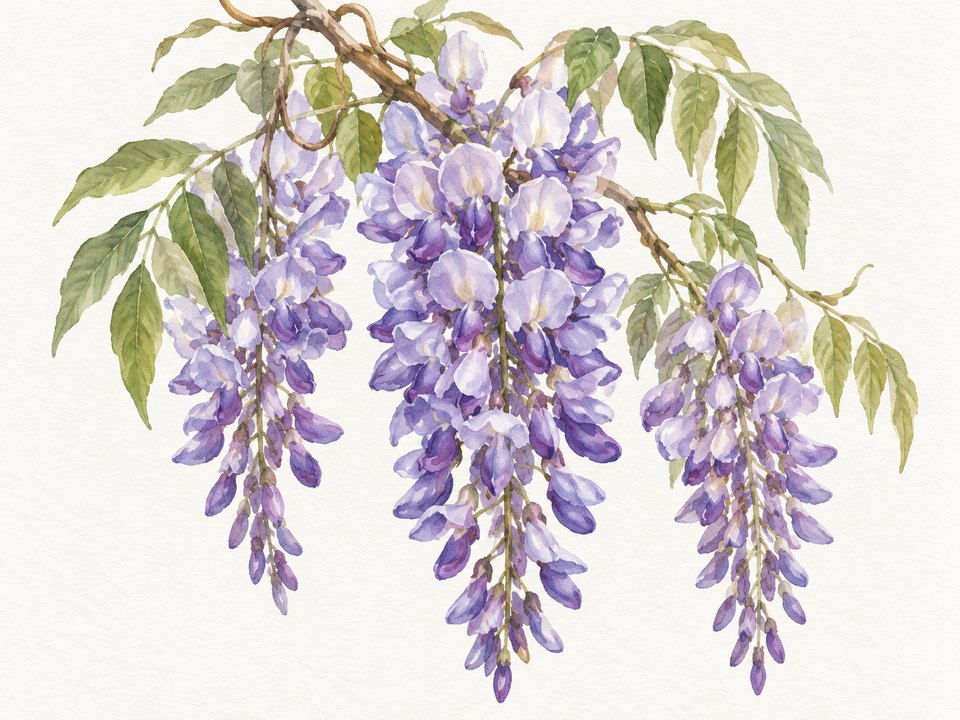
Wisteria includes native and Asian species. The facts and invasive-plant caution below describe Chinese wisteria (Wisteria sinensis). They do not describe every wisteria. Native American wisteria is a different plant.
Height
It is a deciduous woody vine that can grow to 40 feet.[1]
Spread
Stems can reach 10 inches thick. Invasions often spread from old plantings.
Foliage
It is deciduous. Its alternate, pinnately compound leaves have 7 to 13 leaflets.
Seasonal behavior
Very showy, fragrant lavender, purple, or white flowers appear in long dangling spring clusters. Its bean-like seed pods are about 6 inches long. Be careful, because Chinese wisteria can displace native vegetation and kill trees and shrubs by girdling them.
Why Wisteria is a problem here
Chinese and Japanese wisteria are aggressive invaders in the South. The vines climb into trees, girdle trunks, pull down fences and arbors, and send runners through beds. The Lady Bird Johnson Wildflower Center recommends native alternatives over the Asian wisterias.[1][2]
What to plant instead
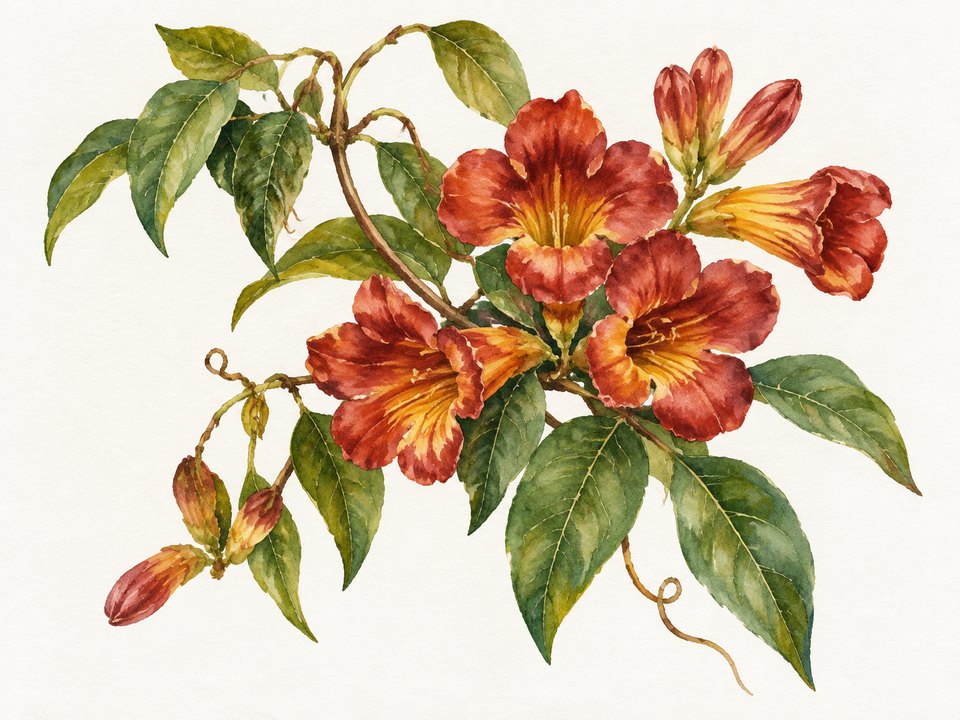
For cascades of bloom on an arbor that stays in bounds, consider one of these plants:
 Illustration
CrossvineBignonia capreolataIllustration 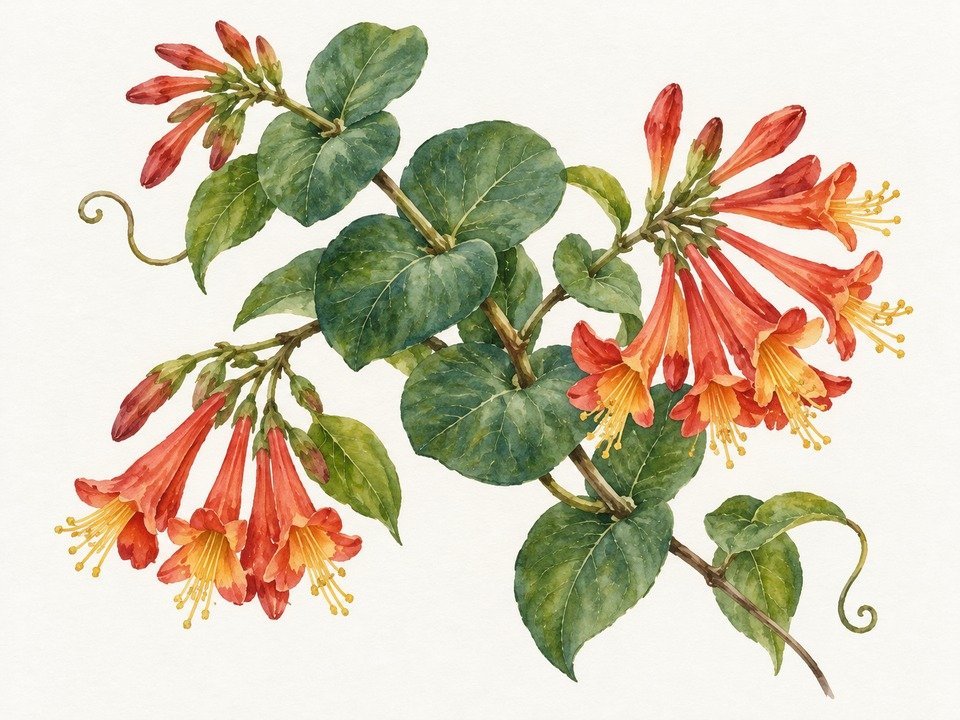 Illustration
Coral HoneysuckleLonicera sempervirensIllustration
If it is already on your property, the Texas Allied Landscape team can talk through removal and a replacement plan.
Care Instructions for Your Wisteria
How to Water a Wisteria
Mature height and spread
It is a deciduous woody vine that can grow to 40 feet.[1] Stems can reach 10 inches thick. Invasions often spread from old plantings.
Normal seasonal behavior
Very showy, fragrant lavender, purple, or white flowers appear in long dangling spring clusters. Its bean-like seed pods are about 6 inches long. Be careful, because Chinese wisteria can displace native vegetation and kill trees and shrubs by girdling them.
Wisteria questions
Why won't my wisteria bloom?
The most common reasons are age, nitrogen, shade, and pruning. The plant may be too young, since seed-grown plants can take years. It may get too much nitrogen, which gives all leaves and no flowers. It may be in too much shade, or it was pruned at the wrong time. Full sun, lean feeding, and pruning in summer after bloom fix most cases.[3]
Is wisteria invasive in Texas?
Chinese and Japanese wisteria are aggressive spreaders. They escape into woods and strangle trees. If you want the look without the takeover, plant American wisteria or native crossvine instead.[2]
How do I keep wisteria from taking over?
Twice-a-year pruning is the price of admission. Cut the long whips back hard in summer after bloom, then shorten side shoots again in winter. Without it, the vine swallows arbors, fences, and gutters.[4]
Next step: Our horticulturalists can put an established wisteria on a twice-yearly pruning schedule.
Can wisteria be trained as a tree?
Yes. Choose one trunk, remove all other stems, and stake it for the first years. Head the top to form a canopy. It takes regular pruning forever, but the result is a free-standing flowering "tree."[5]
In these community guides
- Art in progress
Cordillera Ranch Landscaping
Bring your address, survey and yard ideas. We check the right guideline set, plan planting and irrigation, prepare the…

Illustration. Illustration based on reference photos of Johnson Ranch. Not a single literal view. Johnson Ranch Landscaping
Share your Johnson Ranch address, survey and yard ideas. Texas Allied Landscape can help plan planting, irrigation and…

Illustration. Illustration based on reference photos of Rogers Ranch - Point Bluff and other neighborhoods. Not a single literal view. Rogers Ranch Landscaping
Plan your Rogers Ranch landscape with lawn, tree and irrigation guidance. Get help with the review package, approved…
Illustration. Illustration based on reference photos of Shavano Rogers Ranch - Crosstimber. Not a single literal view. Crosstimber Landscaping
Plan your Crosstimber plants, shade and irrigation. Get help matching your lot rules, preparing the review package and…
Sources
- Ask Mr. Smarty Plants: Distinguishing non-native Wisteria, Lady Bird Johnson Wildflower Center.https://www.wildflower.org/expert/show.php?id=8343&frontpage=trueabc
- Lady Bird Johnson Wildflower Center, Ask Mr. Smarty Plants on wisteria.https://www.wildflower.org/expert/show.php?id=9384ab
- Utah State University Extension, "Wisteria in the Garden."https://extension.usu.edu/yardandgarden/research/wisteria-in-the-garden/↑
- University of Arkansas Extension, "Wisteria."https://www.uaex.uada.edu/yard-garden/in-the-garden/reference-desk/vines/wisteria.aspx↑
- Ask Extension, "Wisteria woes!"https://ask.extension.org/kb/faq.php?id=868242↑