
Property owners
Rosemary
- Plant
- Rosemary
- Botanical name
- Salvia rosmarinus
- Group
- Medium shrubs and perennials
Rosemary care: sun, drainage, watering and pruning for Salvia rosmarinus, with notes on upright and trailing forms.
On this page
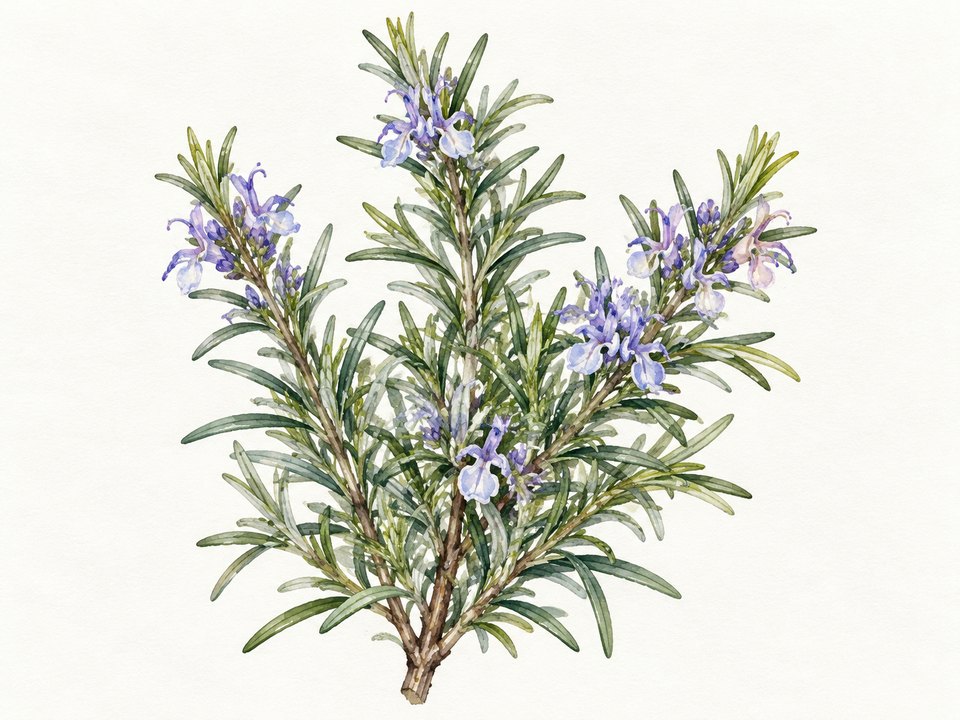
Botanical name: Salvia rosmarinus. A woody, evergreen herb that doubles as a landscape shrub in San Antonio.[1]
Light and soil
Full sun and sharp drainage are non-negotiable. Rosemary rots in wet clay, so plant it in raised beds or soil amended for drainage; it tolerates alkaline Central Texas soil well.[1]
Height and spread
Upright forms reach about 3 to 6 feet tall and 2 to 4 feet wide; trailing forms stay lower and spill over walls and borders.[1]
Foliage and seasonal behavior
Evergreen, needle-like leaves with small blue flowers that appear mainly in the cooler months. Growth slows in peak summer heat and after hard freezes.
Water
Low water once established. Let the soil dry between waterings; consistently wet roots are the main cause of failure.[1]
Pruning
Tip-prune after flowering to keep plants dense. Avoid cutting back into old, leafless wood, which resprouts poorly.[2]
When to Plant Rosemary
Plant rosemary in spring after the last frost, or in early fall; it establishes fastest in warm soil with sharp drainage.[1]
If you would like a hand, the Texas Allied Landscape team can plant your rosemary and keep it thriving.
Planting
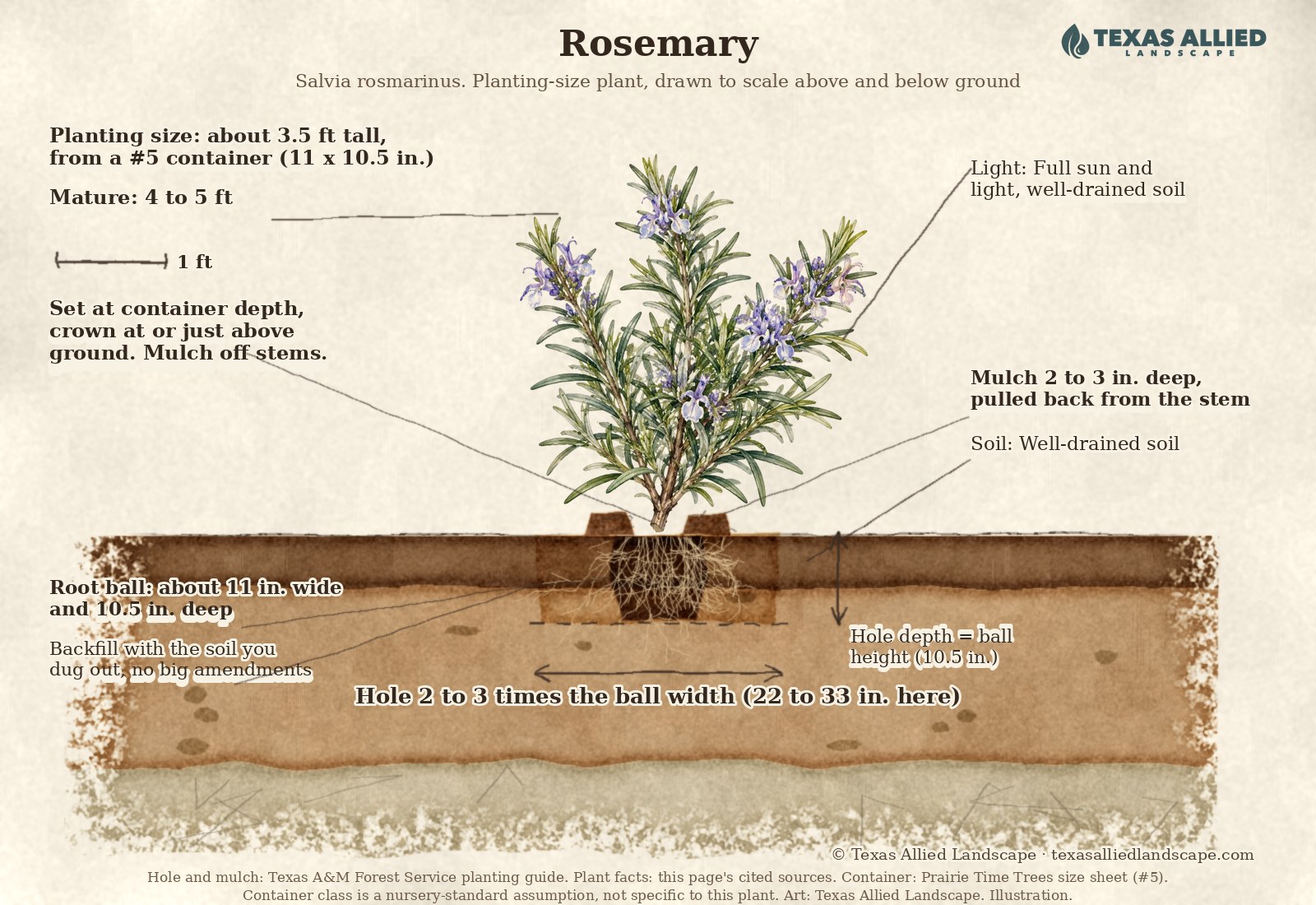
Set the plant at the same depth it grew in the pot, in the sunniest, best-drained spot you have. In heavy soil, plant high on a mound or in a raised bed.[1]
Care Instructions for Your Rosemary
How to Water a Rosemary
Sunlight and soil
At least six hours of direct sun and fast-draining soil.[1]
Mature height and spread
Upright: 3 to 6 feet tall, 2 to 4 feet wide. Trailing: lower, spreading.[1]
Pruning
Light tip pruning after bloom; harvest sprigs any time.
Normal seasonal behavior
Slows in mid-summer heat and may suffer in a hard freeze; established plants usually recover from the roots.[2]
rosemary questions
Why is my rosemary turning brown and dying back?
Wet roots are the usual cause. Rosemary rots in soil that stays damp, especially heavy clay; let the soil dry between waterings and improve drainage around the plant.[1]
Next step: If whole branches keep dying after the soil dries out, our horticulturalists can check the roots and replant in a raised, better-drained spot.
When does rosemary bloom?
Small blue flowers appear mainly in the cooler months, not in peak summer. Slow growth in mid-summer heat is normal.[1]
Can I grow rosemary in a pot?
Yes, and pots suit it well because they drain fast. Use a gritty mix and a sunny spot, and water only once the mix dries.[1]
When should I prune rosemary?
Tip-prune after flowering to keep plants dense, and harvest sprigs any time. Avoid cutting into old, leafless wood, which resprouts poorly.[2]
Let Texas Allied Landscape care for your Rosemary
Want fresh rosemary from your garden? We plant it, and our maintenance keeps the harvest coming.
In these community guides

Illustration. Illustration based on reference photos of Arbors of Fair Oaks. Not a single literal view. Arbors of Fair Oaks Landscaping
Bring your address, unit and yard ideas. Texas Allied Landscape helps design the planting and irrigation, prepare the…
Illustration. Illustration based on reference photos of Shavano Rogers Ranch - Crosstimber. Not a single literal view. Crosstimber Landscaping
Plan your Crosstimber plants, shade and irrigation. Get help matching your lot rules, preparing the review package and…

Illustration. Illustration based on reference photos of Rogers Ranch - Point Bluff and other neighborhoods. Not a single literal view. Rogers Ranch Landscaping
Plan your Rogers Ranch landscape with lawn, tree and irrigation guidance. Get help with the review package, approved…

Illustration. Illustration based on reference photos of Johnson Ranch. Not a single literal view. Johnson Ranch Landscaping
Share your Johnson Ranch address, survey and yard ideas. Texas Allied Landscape can help plan planting, irrigation and…
- Art in progress
Homestead Landscaping
Share your Homestead address, survey and yard ideas with Texas Allied Landscape. We help prepare a clear plan for…

Illustration. Illustration based on reference photos of Redbird Ranch. Not a single literal view. Redbird Ranch Landscaping
Bring your survey and yard ideas. Texas Allied Landscape helps design planting and irrigation, prepare the review…
- Art in progress
Cordillera Ranch Landscaping
Bring your address, survey and yard ideas. We check the right guideline set, plan planting and irrigation, prepare the…

Illustration. Illustration based on reference photos of Vicinia. Not a single literal view. Vicinia Landscaping
Bring your address, survey and ideas. Texas Allied Landscape helps check the rules, design the space and prepare for…